

Blog
The Veneer Consultation Just Got A Lot More Serious in Melbourne, Here Is What You Should Actually Be Asking Now

I have been thinking about veneers for a while. My friend got them last year and the smile is genuinely good, not the fake bright-white tic-tac thing, just a tidier, healthier looking version of what was already there. Naturally I started looking into it for myself, and the rabbit hole turned out to be deeper than I expected. Mostly because the rules around how dentists can talk about veneers in Australia changed in September last year, and nobody seems to have updated the conversation.
If you are walking into a consultation in Melbourne in 2026, the experience should look different to what your friend went through in 2023. And if it does not look different, that is the first thing worth noticing.
What changed and why it matters
On 2 September 2025, AHPRA and the Dental Board of Australia rolled out new guidelines for non-surgical cosmetic procedures, and dental veneers were specifically classified as a higher-risk procedure under the new framework. Same category as cosmetic injectables, dermal fillers, thread lifts. Not the breezy “lunchtime makeover” framing the industry was using for years.
A few things actually shifted:
- Patients under 18 now have a mandatory cooling-off period before any cosmetic procedure can proceed
- Testimonials referencing clinical outcomes or treatment experiences are out, which means the wall of glowing patient quotes most cosmetic dental sites used to lean on is no longer allowed
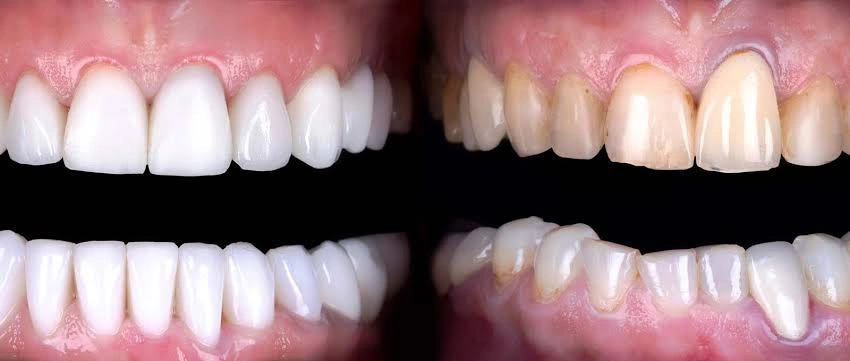
- Before-and-after photos are heavily restricted and have to meet strict authenticity, consent, and presentation conditions
- Influencer endorsements are banned, the era of paying someone with a big Instagram following to rave about their new smile is over
- AI-generated treatment outcome images are prohibited
- Urgency tactics and trivialising language like “lunchtime smile” or “quick fix” or “20% off this month” can no longer be used to push patients toward booking
Penalties for breaches go up to $30,000 per individual breach and $60,000 for the practice, which is enough to make compliance a real business decision rather than a polite suggestion.
The reason this matters for someone sitting on the consultation chair is that the rules are now backing up what a good cosmetic dentist was already doing voluntarily, and clearly separating them from the clinics that were running on hype.
The thing about veneers nobody likes to dwell on
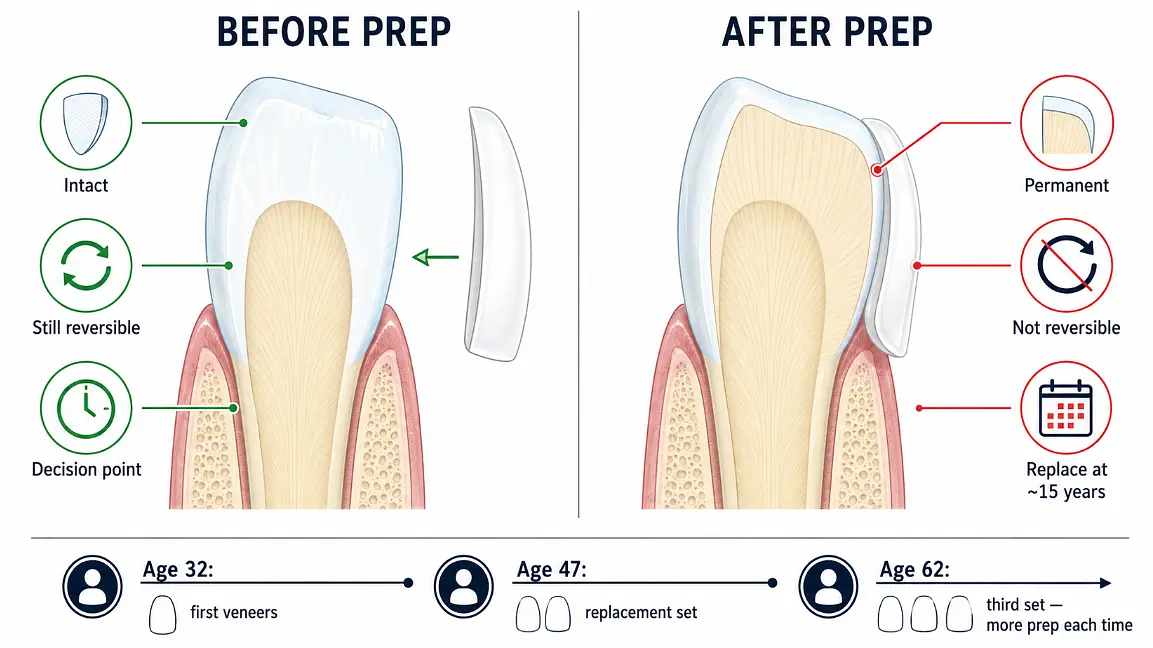
Before we get into the consultation, the part the marketing usually skims past. Traditional porcelain veneers require shaving enamel off the front of the tooth, and enamel does not grow back. Once it is gone it is gone, and the tooth will need some kind of restoration over it for the rest of your life. The veneer you get at 32 will need replacing at 47 or so, and the second set will require more prep than the first because the underlying tooth has been through this before.
No-prep and minimal-prep veneers do exist and they preserve more of the original tooth, but they are not suitable for every case. If the teeth are already a bit forward, or if the bite is off, a dentist who actually knows what they are doing might tell you minimal-prep will not give you the result you want.
A good consultation should walk you through this honestly. A bad one will glide over it because the moment a patient really understands the permanence, the booking rate drops. The new AHPRA performance guidelines essentially require this conversation to happen properly, which is part of why the consultation itself has become the most important hour of the entire decision.
What a proper Melbourne consultation should now include
The Performance Guidelines that came in last September set out specific expectations for how cosmetic procedures are assessed, consented to, and followed up. A Melbourne cosmetic dentist doing it properly should be covering:
- A real clinical assessment of your teeth, gums, bite, and enamel before any treatment plan is even discussed
- A clear explanation of the actual risks, not just the upside, including the permanence of enamel removal where relevant
- Recovery and aftercare expectations, including what the temporary phase feels like and what to expect long-term
- Cost transparency, with a written quote that includes the lab fee, temporaries, and what happens if something chips in the first year
- Information about how to make a complaint if something goes wrong, which is now mandatory before any cosmetic procedure
- An honest answer about whether veneers are actually the right call for you versus whitening, aligners, or a combination
The last one is the tell. A dentist who walks you out of the consultation saying “actually, whitening and aligning your front two might give you the result you want without committing to veneers” is one whose judgment is worth trusting. A dentist who recommends six veneers on top regardless of what you walked in with is one who has not really updated their consultation to the post-September framework, regardless of what their compliance page says.
How to actually verify a Melbourne dentist before you book
Every practising dentist in Australia is registered with the Dental Board of Australia through AHPRA, and the register is public. You can search any practitioner’s name on the AHPRA website and see:
- Their current registration status
- Their qualifications
- Whether they hold specialist registration (prosthodontist, orthodontist, etc.) or are a general dentist
- Any conditions or undertakings on their registration
- Any disciplinary history
A general dentist can absolutely do excellent cosmetic work, but they cannot legally call themselves a specialist. Only dentists who completed the additional postgraduate training and registered as specialists can use titles like “prosthodontist” in their advertising. Anyone implying specialist status without holding it is breaching the same advertising guidelines.
The register check takes about two minutes and it is probably the single most useful thing you can do before booking a consultation anywhere.
Red flags in 2026 marketing that signal a clinic worth avoiding
Now that the new rules have been in force for a while, the clinics that have not adapted are easy to spot. If a Melbourne clinic’s website or Instagram still leans heavily on any of the following, that is information:
- Wall-to-wall patient testimonials referencing specific treatments or outcomes
- Before-and-after galleries displayed without the strict consent and context conditions the new rules require
- Urgency-driven offers like “20% off veneers this month” or “limited consultation spots”
- Influencer content showing transformations
- Outcome promises like “perfect smile” or “life-changing” results
- Targeting language that plays on insecurity (“hate your smile?”, “fix your crooked teeth”)
- Specialist titles used by practitioners not registered as specialists
None of this means the dental work itself is necessarily bad. But it does mean the practice has not updated to the current regulatory standard, which raises a fair question about what else they have not updated.
The flip side is the practices that have leaned into the new framework. A cosmetic dentist in Melbourne operating under the post-September 2025 standards should have moved their messaging toward educational content, transparent practitioner credentials, clear procedure explanations, and the kind of detailed pre-consultation information that lets patients make informed decisions rather than emotional ones.
What to bring to the consultation, what to ask, and what to listen for
Take photos of smiles you like and smiles you do not. Not celebrity smiles, just real ones, and ideally with similar skin and lip tone to yours so the dentist can match shade properly. Photos give the conversation a starting point that is more useful than the abstract.
A few questions worth asking, and what good answers sound like:
- “How many teeth are you recommending and why?” Good answer involves your specific bite, smile line, and what shows when you talk and laugh. Bad answer is “six on the top, that is what we usually do.”
- “What happens if one chips in the first year?” Good answer is specific about warranty, repair process, and cost. Bad answer is general reassurance.
- “Is the lab fee included in the quote?” This is a yes or no question. Anything other than a clear yes or no is a problem.
- “What is the alternative if I do not get veneers?” Good answer walks you through whitening, aligning, or doing nothing as legitimate options. Bad answer treats anything other than booking veneers as a failure.
- “Can you show me work you have done on patients with similar teeth and shade to mine?” Tricky one under the new rules because before-and-after photos are restricted, but the dentist should still be able to talk through their case experience without breaching guidelines.
The vibe to listen for is whether the consultation feels like an assessment or a sales pitch. The new framework was specifically designed to push consultations toward the assessment side. A practice that has internalised that will feel different from one still operating in 2023 sales mode.
References
Dental Board of Australia — New cosmetic procedure guidelines published (June 2025 announcement, guidelines effective 2 September 2025)
AHPRA — Dental practitioner regulation overview and register access
King & Wood Mallesons (via Lexology) — Injecting some guidance: AHPRA puts cosmetic industry on notice with new guidelines (analysis of the September 2025 Guidelines)
MDA National / Complete Smiles — AHPRA Advertising FAQs for Dentists (summary of the September 2025 changes for cosmetic dental marketing)
Australian Health Practitioner Regulation Agency — Guidelines for registered health practitioners who perform non-surgical cosmetic procedures (effective 2 September 2025)
Dental Rank — AHPRA’s Advertising Changes: What Every Dental Practice Must Update in 2026 (industry analysis of penalty structure and enforcement)