

Blog
The Systems That Make Scaling Easier

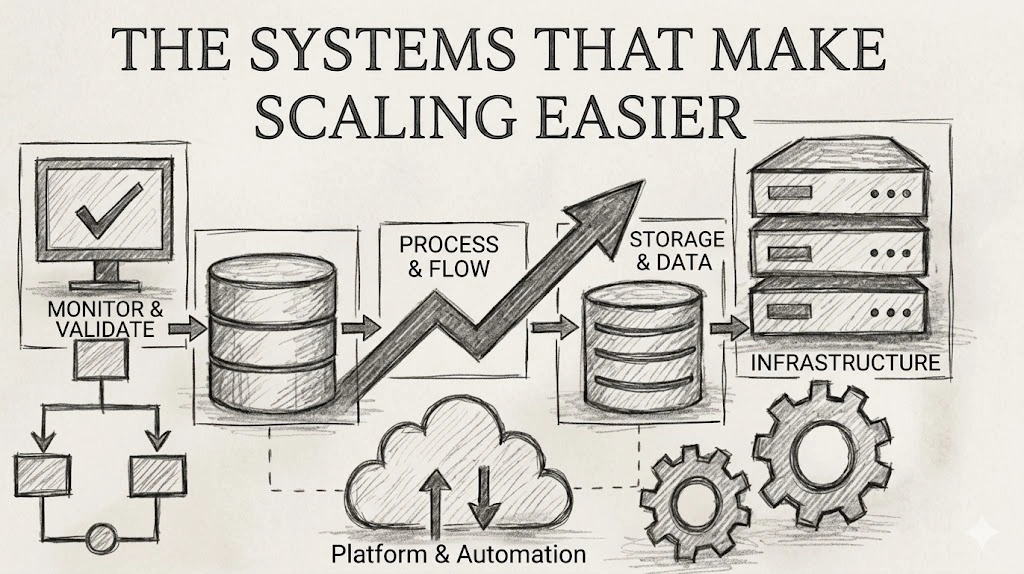
Most businesses don’t struggle because they lack demand. They struggle because their systems can’t keep up with growth. What works when you’re small often breaks when volume increases, and that’s where things start to slow down, become inconsistent, or fall apart entirely.
- Scaling isn’t just about doing more. It’s about doing things in a way that can handle more without creating chaos. The right systems don’t just support growth, they make it easier, more predictable, and far less stressful.
- Businesses that deal with physical products often rely on tools like warehouse management systems to organise inventory, track movement, and reduce errors as order volume increases.
Why Growth Creates Friction
When you scale, everything gets tested. Processes that felt efficient at a smaller level can quickly become bottlenecks.
Common issues include:
- Manual tasks taking too long
- Miscommunication between teams
- Errors increasing as workload grows
Growth doesn’t create these problems, it reveals them.
Complexity increases faster than expected
Adding more customers, products, or services doesn’t just increase workload, it multiplies the number of moving parts.
Without clear systems, this leads to:
- Confusion about responsibilities
- Delays in execution
- Inconsistent results
The Role of Systems in Scaling
A good system ensures that tasks are completed the same way every time, regardless of who is doing them.
This consistency helps:
- Maintain quality
- Reduce errors
- Improve efficiency
Instead of relying on individuals to remember every detail, the process itself guides the outcome.
They reduce reliance on individuals
When a business depends too heavily on specific people, scaling becomes difficult. Systems allow tasks to be replicated without needing constant oversight.
This means:
- Easier onboarding for new team members
- Less disruption when someone is unavailable
- More predictable performance
Key Systems That Support Growth
Clear, simple documentation is one of the most overlooked systems. It turns knowledge into repeatable steps.
Effective documentation should:
- Be easy to follow
- Focus on actions, not theory
- Be updated regularly
This creates a reference point that keeps everyone aligned.
Communication systems
As teams grow, communication becomes more complex. Without structure, important details get lost.
Strong communication systems include:
- Defined channels for specific topics
- Clear expectations for updates and reporting
- Regular check-ins without unnecessary meetings
The goal is clarity, not constant messaging.
Task and workflow management
Tracking work becomes essential as volume increases. Without it, tasks slip through the cracks.
A good workflow system helps:
- Assign responsibilities clearly
- Track progress in real time
- Identify delays early
This keeps everything moving without constant supervision.
Automation Where It Actually Helps
Not everything needs to be automated, but repetitive tasks are a good place to start.
Examples include:
- Data entry
- Order processing steps
- Routine notifications
Automation frees up time for higher-value work.
Avoid overcomplicating things
It’s easy to add too many tools or automate too much. This can create more confusion instead of solving problems.
Focus on:
- Simplicity
- Clear outcomes
- Tools that genuinely reduce workload
If a system adds complexity without clear benefit, it’s not helping.
Visibility Drives Better Decisions
As businesses grow, it becomes harder to keep track of what’s happening. Systems that provide visibility help you stay in control.
This includes:
- Tracking key metrics
- Monitoring performance
- Identifying trends early
Data supports smarter scaling
Instead of guessing what to do next, you can make decisions based on real information.
This leads to:
- Better resource allocation
- More accurate forecasting
- Faster problem-solving
Building Systems That Actually Work
You don’t need to build everything at once. Start by identifying the biggest pain points.
Ask:
- What tasks take too long?
- Where do mistakes happen most often?
- What requires constant oversight?
Fixing these areas first creates immediate impact.
Keep systems practical
The best systems are simple enough to be used consistently. Overly complex processes often get ignored.
Focus on:
- Clear steps
- Minimal friction
- Ease of use
If people avoid using a system, it’s not effective.
Scaling Without Losing Control
When the right systems are in place, scaling doesn’t feel chaotic. It feels structured and controlled.
You’re able to:
- Handle increased demand
- Maintain quality
- Adapt without constant stress
Systems create freedom
Rather than being tied to every detail, you can step back and focus on higher-level decisions.
This is what allows businesses to grow without burning out the people running them.
Making Growth Sustainable
Scaling isn’t about pushing harder. It’s about building a foundation that can support more without breaking.
When you invest in the right systems, growth becomes less about reacting to problems and more about moving forward with confidence. Instead of constantly fixing issues, you’re creating a business that’s built to handle what comes next.