
Blog
The 3-Step Framework to Scale TikTok Ads Efficiently Quickly


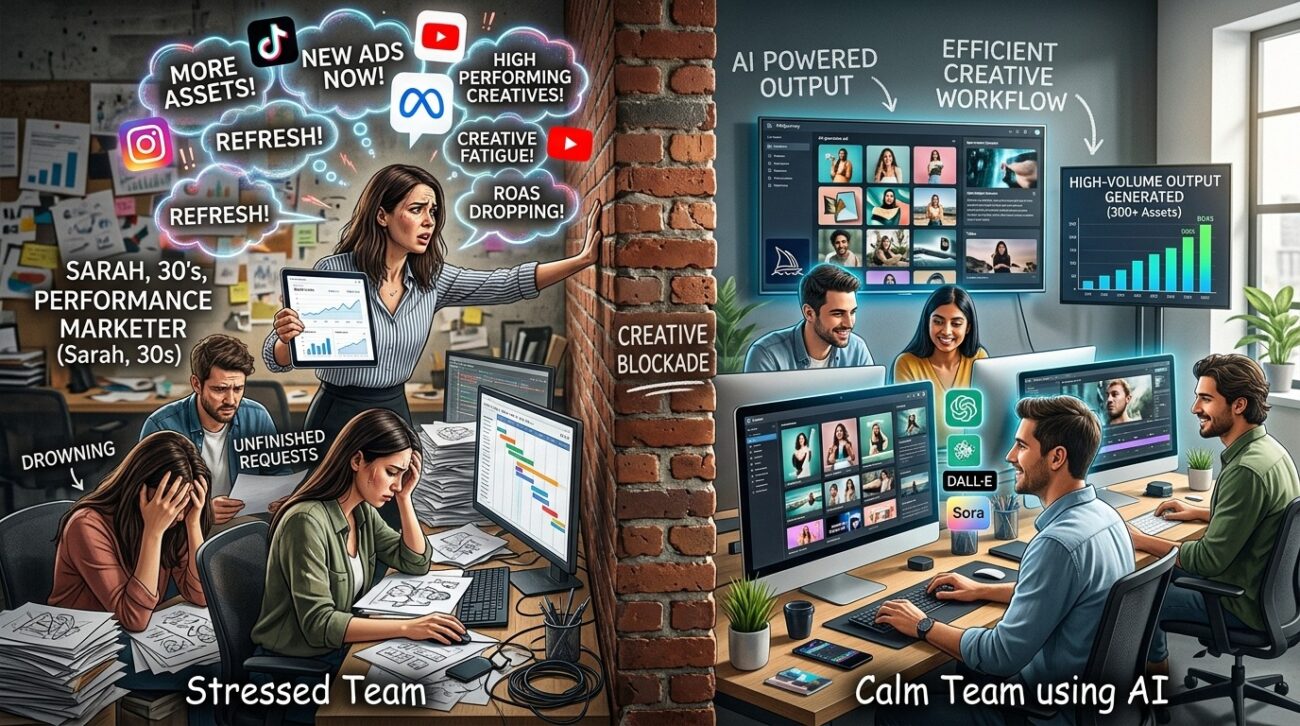
Most performance marketers hit the same wall. They know that ads in video formation drive results. They understand platform algorithms reward fresh, engaging content. But when you’re managing campaigns across TikTok, Instagram, Meta, and YouTube, the demand for new creative assets becomes relentless.
The traditional solutions: hire more people, work longer hours, or accept declining performance from overused creative. AI ad generator tools offer a fourth option: maintain quality and volume without burning out your team.
Why Creative Velocity Became Non-Negotiable
The video ads behavior has been substantially transformed by platform behavior:
The exhaustion of creativity occurs sooner: What was doing so well a few weeks ago, is no longer working in a few days. The ads are repeated on viewers feeds, stories and suggested content in many occasions. The performance is not being diminished due to the lack of quality of the creative but disengagement due to familiarity.
The distribution algorithm is biased towards new similarities: TikTok ads and other short video platforms give more preference to new content within their delivery models. Preferential distribution is given to new creatives and the older assets receive subsiding organic reach despite its past success.
Tests have increased: In the past to find winning creatives only required 3-5 tests to be conducted. Today, leading brands are trying 20-30 ideas each contest, and they have more format variations to fit into various placements and segments.
More video promos, more often, in different forms are required of brands. That collides with the boundaries of conventional production.
The Framework: Strategy, Generation, Optimization
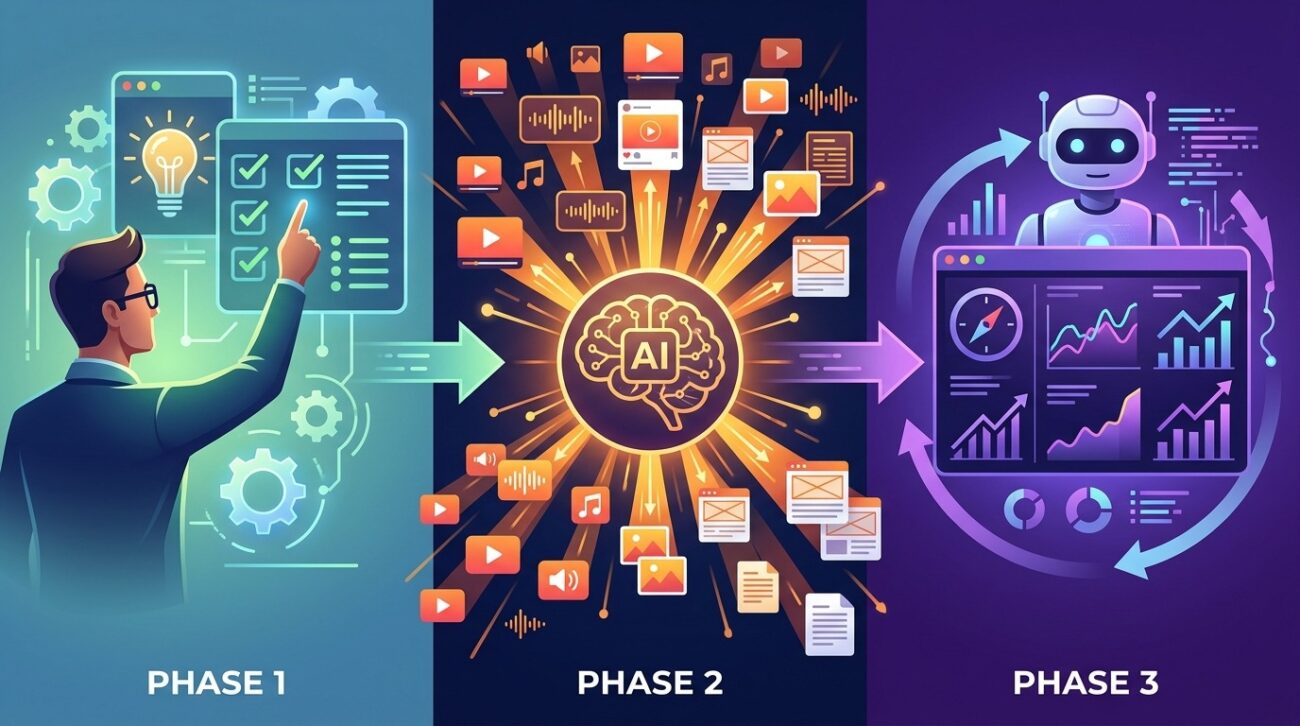
The most effective teams using AI to scale video ads follow a three-phase approach that maintains quality while dramatically increasing output.
Phase 1: Strategic Foundation (Human-Led)
Before generating anything, define what you’re optimizing for:
- Campaign objective (awareness, consideration, conversion)
- Target audience segment and platform behavior
- Core product benefits and differentiation
- Brand voice and visual guidelines
- Success metrics and testing hypotheses
This phase stays human-driven. AI needs strategic direction. Clear inputs = better outputs.
Topview’s AI Ad Generator starts here by allowing teams to specify campaign parameters, target platforms, and creative objectives upfront. This ensures generated assets align with broader marketing strategy rather than producing generic content.
Phase 2: Rapid Asset Generation (AI-Powered)
Strategy defined: the AI manages the layer of execution:
Add your product assets Add product photos, available footage or campaign ideas. The relies on text-to-video and image-to-video models (e.g., HappyHorse 1.0) to analyze visuals, recognize salient features, and map them to familiar template ads – converting static materials into dynamic video with dynamic, cinematic movement.
test variants Use a single idea to produce an enormous number of different variations to test the variants of hooks, opening sequences, product angles and call-to-action strategies. Weeks would be required to complete this amount of tests with traditional testing.
Format various placements Automatically set aspect ratios, durations, and safe areas of feed placements, stories, in-stream advertisements, and other types of inventory.
The time spent reduces to days or weeks to hours. A single planner is now able to manage production volume that would have needed a whole group at one time.
Phase 3: Data-Driven Refinement (Collaborative)
AI ads generate quickly, but performance data determines what scales:
Run controlled tests Launch variations with equal budget allocation to identify top performers without bias toward any single concept.
Analyze performance patterns Look beyond surface metrics. Which hooks retain attention longest? Which product demonstrations drive highest click-through? Which CTAs convert most efficiently?
Feed insights back into generation Use performance learnings to inform the next round of AI-generated content. This creates a feedback loop where each iteration gets smarter based on actual audience behavior.
Scale winners, replace losers Increase spend behind proven concepts while rapidly generating new tests to replace underperformers. This continuous refresh prevents creative fatigue while maintaining campaign momentum.
What This Looks Like in Practice

A mid-sized e-commerce brand launching a new product category might approach it this way:
Week 1: Creative team develops core messaging strategy and identifies three product benefit angles to test. They provide high-quality product images and brand guidelines to the AI ad generator.
Week 2: Using Topview’s AI Ad Generator, they produce 24 video ads: eight variations for each benefit angle, formatted for TikTok ads, Instagram Reels, and YouTube Shorts. Total production time: approximately six hours.
Week 3: They launch all variations with equal test budgets, tracking engagement, click-through, and conversion metrics. Data reveals one benefit angle dramatically outperforms the others.
Week 4: They generate 15 new variations exploring different creative executions of the winning angle while maintaining the proven messaging framework. The best-performing assets get scaled with increased media spend.
This iterative cycle continues throughout the campaign. The creative team focuses on strategy and optimization rather than getting buried in production logistics.
Why AI Ad Generators Work Where Templates Don’t

Standard video templates offer speed but lack adaptability. They produce content that looks similar across brands, reducing differentiation and making it harder to stand out in crowded feeds.
Quality AI ad generator tools operate differently. Built on motion synthesis technology like Seedance 2, they learn from patterns across millions of high-performing video promos but apply those learnings to your specific product, brand voice, and campaign objectives delivering lifelike motion quality that rivals professionally shot footage. The output feels custom because it is custom, just produced through AI assistance.
This distinction matters. Template content plateaus fast audiences recognize the familiar format. AI-generated content with brand-specific elements and strategic direction maintains effectiveness longer.
Implementation Essentials
Teams seeing the best results typically:
Invest in quality product assets: Better input images and footage produce better AI commercials. This is worth prioritizing.
Build testing discipline: The ability to generate quickly only creates value when paired with systematic testing and optimization based on real performance data.
Preserve human oversight: AI handles execution; humans provide strategic judgment, brand alignment checks, and creative direction.