

Blog
Stop Waiting for Blurry Vision to Book an Eye Exam

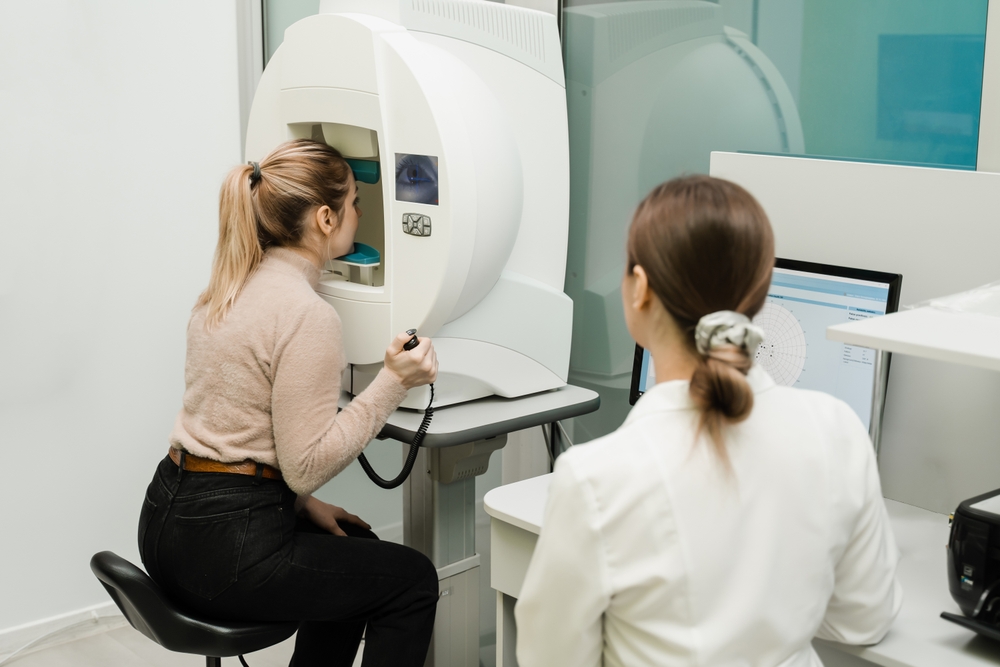
Adults should not wait for blurry vision before scheduling an eye exam. Vision can feel clear while early eye disease, eye pressure changes, retinal problems, or diabetes-related eye changes are developing quietly. For anyone searching for an ophthalmologist, the goal is not only sharper sight today. The goal is a clear plan for protecting eye health over time.
Paul Michael Mann, MD, FACS, from Mann Eye Institute, eye care is built around comprehensive exams, personalized guidance, and helping patients make informed decisions about their vision at every stage of life.”
Why Clear Vision Can Still Miss Silent Eye Disease
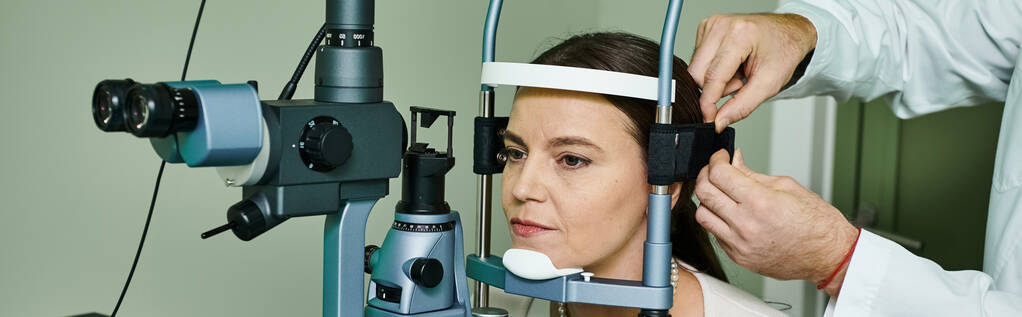
Clear vision can be reassuring, but it is not a complete health report. A person can read road signs, work on a laptop, and use a phone comfortably while early eye disease remains hidden. The National Eye Institute explains that many eye diseases have no symptoms or warning signs at first, and a dilated eye exam can help detect them before vision loss is noticeable [1].
This is why a comprehensive eye exam matters even when nothing feels wrong. An eye chart checks how clearly you see letters at a distance. A medical eye exam can evaluate the cornea, lens, retina, optic nerve, eye pressure, tear film, and other structures that affect long-term vision.
Clear sight is not the same thing as silent safety.
Adults often assume that eye care is only necessary when glasses stop working. That assumption can delay care for conditions such as glaucoma, diabetic retinopathy, cataracts, and age-related macular degeneration. Research on adult medical eye evaluation emphasizes that comprehensive exams are designed for adults with and without risk factors, not only people with obvious symptoms [2].
How Routine Exams Help Catch Cataracts, Glaucoma, and Retinal Changes
Routine eye exams help catch eye conditions that may develop gradually. Cataracts can make vision dim, cloudy, or glare-sensitive over time. Glaucoma can damage the optic nerve before central vision changes. Retina changes can affect sharp central vision, peripheral vision, or the health of the blood vessels at the back of the eye.
The American Academy of Ophthalmology recommends a baseline comprehensive eye evaluation at age 40 for adults without risk factors, because early signs of eye disease and vision changes can begin around that stage of life. Adults under 40 with no signs or risk factors may need less frequent screening, while adults with risk factors need a schedule based on their medical history and exam findings [3].
Routine exams are not about finding problems for the sake of finding problems. Routine exams are about finding useful information while there is still time to act.
Age-related eye disease becomes more relevant as adults get older. Chou and colleagues found that age-related macular degeneration, diabetic retinopathy, increasing age, and education level were associated with visual impairment not due to refractive error among U.S. adults aged 40 and older [4].
Diamond and colleagues also found that optometric exams in a community screening setting helped detect vision-affecting conditions among adults aged 40 and older, many of whom had not received a recent dilated eye exam [5].
When Contact Lens Wearers and Screen-Heavy Workers Need Closer Attention

Contact lens wearers and screen-heavy workers often need closer attention because daily habits can affect the surface of the eye. Contact lenses interact with the cornea and tear film. Long screen sessions can reduce blinking, increase dryness, and make vision fluctuate. These problems may feel minor at first, but they can affect comfort, work performance, contact lens safety, and candidacy for procedures such as LASIK, PRK, SMILE, EVO ICL, or cataract surgery.
A screen-heavy worker may notice burning, dryness, intermittent blur, headaches, or tired eyes in the afternoon. A contact lens wearer may notice redness, irritation, reduced wearing time, or discomfort that seems to worsen over months. These symptoms may come from dry eye, allergies, lens fit, corneal irritation, prescription changes, or other eye surface issues.
An adult eye exam can help separate a lifestyle irritation from a medical eye concern.
Technology also matters. Corneal topography can help evaluate corneal shape. Tear film testing can help identify dry eye patterns. Slit-lamp evaluation can show inflammation, contact lens-related changes, or eyelid issues. Retinal imaging and optical coherence tomography can help evaluate the back of the eye when symptoms or risk factors suggest deeper concerns.
Adults considering vision correction should not treat an eye exam as a formality. Candidacy depends on eye health, prescription stability, corneal shape, tear film quality, age, lifestyle, risk tolerance, recovery expectations, alternatives, and cost. The safest procedure is the one the eye can support.
What Your Health History Says About Your Ideal Exam Schedule
Your health history may matter more than your age. Diabetes, high blood pressure, family history of glaucoma, previous eye surgery, high myopia, steroid use, autoimmune disease, eye injury, and known retinal disease can all change how often you should be examined.
The National Eye Institute says people over age 60, African American adults over age 40, and people with a family history of glaucoma should get a dilated eye exam every 1 to 2 years [1]. It also advises people with diabetes or high blood pressure to ask their doctor how often they need dilated eye exams [1].
Diabetes deserves special attention because diabetic eye disease may not cause early symptoms. The CDC states that people with diabetes are at higher risk of vision loss and eye diseases, yet many do not receive annual eye exams [6].
Gale, Scruggs, and Flaxel explain that early detection of diabetic retinopathy is key to preventing vision loss, but many patients still do not receive appropriate examinations [7].
Your medical history turns a general eye exam schedule into a personal eye care plan.
Risk tolerance also matters. A patient with a strong family history may prefer more frequent monitoring. A patient with diabetes may need annual or more frequent care depending on findings. A patient with stable vision and no risk factors may follow a longer interval. A patient with symptoms should move the visit sooner.
How Cost, Insurance, and Convenience Fit Into Preventive Eye Care
Cost, insurance, and convenience affect real decisions. Adults may delay an eye exam because they are busy, unsure what insurance covers, or worried that the visit will lead to expensive recommendations. Those concerns are understandable, but preventive eye care can also protect options.
A routine exam may reveal that no treatment is needed. It may update glasses. It may identify dry eye before it affects contact lens comfort. It may catch cataract changes early enough for thoughtful lens planning. It may detect glaucoma risk before a person notices vision loss. It may uncover retina changes that need monitoring.
Rein and colleagues modeled eye care options for new Medicare enrollees and found that dilated eye evaluations were more cost-effective than visual acuity screening alone in that analysis [8].
Sloan, Yashkin, and Chen found that regular eye examination rates among older Medicare beneficiaries with diabetes or chronic eye disease remained below recommended levels, showing that access and follow-through remain real barriers [9].
Preventive eye care is not only a medical decision. It is a planning decision.
Patients should ask what type of exam they need, whether dilation or imaging is recommended, what insurance may cover, what costs may be out of pocket, and what follow-up schedule makes sense. These questions are part of smart decision-making, not signs of hesitation.
When the Best Time to Go Is Before Something Feels Wrong
The best time to go is often before something feels wrong because early care gives patients more choices. Waiting for blurry vision may mean waiting until a condition has already affected daily life. An exam before symptoms can establish a baseline, identify risk, and help the doctor compare future changes.
Yadav and Tandon describe comprehensive eye examination as a way to screen for and diagnose common eye diseases, helping reduce disease burden when paired with appropriate care [10].
Kopplin and Mansberger found that several screening tests, including visual acuity, imaging, visual field testing, and optic nerve assessment, were associated with visually significant eye disease in the studied population [11].
The best eye exam is not always the one that fixes a problem. Sometimes the best eye exam is the one that proves what is still healthy.
Adults should schedule eye exams based on age, symptoms, medical history, family history, contact lens use, screen demands, driving needs, medications, and future vision goals. A healthy adult may follow a general screening schedule. A patient with diabetes, glaucoma risk, cataract symptoms, retinal concerns, or changing vision may need care sooner. A patient considering surgery needs a deeper candidacy conversation.
Stop waiting for blurry vision to book an eye exam. Your eyes do not need to struggle before they deserve attention. A timely exam can give you answers, protect your options, and support the vision you use every day.
References
- National Eye Institute, “Get a Dilated Eye Exam,” 2025.
- R. Chuck, S. Dunn, C. Flaxel, S. Gedde, F. Mah, K. M. Miller, D. Wallace, and D. Musch, “Comprehensive Adult Medical Eye Evaluation Preferred Practice Pattern,” 2020.
- American Academy of Ophthalmology, “Frequency of Ocular Examination,” 2015.
- Chiu-fang Chou, Mary Frances Cotch, S. Vitale, Xinzhi Zhang, R. Klein, D. Friedman, B. Klein, and J. Saaddine, “Age-Related Eye Diseases and Visual Impairment Among U.S. Adults,” 2013.
- Daniel F. Diamond, S. Hirji, Samantha X. Xing, Prakash Gorroochurn, Jason D. Horowitz, Qing Wang, Lisa Park, N. Harizman, Stefania C. Maruri, Desiree R. Henriquez, Jeffrey M. Liebmann, George A. Cioffi, and Lisa A. Hark, “Manhattan Vision Screening and Follow-Up Study: Optometric Exam Improves Access and Utilization of Eye Care Services,” 2024.
- Centers for Disease Control and Prevention, “Promoting Eye Health,” 2024.
- Michael J. Gale, Brittni A. Scruggs, and C. Flaxel, “Diabetic Eye Disease: A Review of Screening and Management Recommendations,” 2021.
- David B. Rein, J. Wittenborn, Xinzhi Zhang, T. Hoerger, Ping Zhang, B. Klein, Kristine E. Lee, R. Klein, and J. Saaddine, “The Cost-Effectiveness of Welcome to Medicare Visual Acuity Screening and a Possible Alternative Welcome to Medicare Eye Evaluation Among Persons Without Diagnosed Diabetes Mellitus,” 2012.
- F. Sloan, A. Yashkin, and Yiqun Chen, “Gaps in Receipt of Regular Eye Examinations Among Medicare Beneficiaries Diagnosed With Diabetes or Chronic Eye Diseases,” 2014.
- Saumya Yadav and R. Tandon, “Comprehensive Eye Examination: What Does It Mean?” 2019.
- Laura J. Kopplin and S. Mansberger, “Predictive Value of Screening Tests for Visually Significant Eye Disease,” 2015.