

Blog
Ophthalmologist or Optometrist? Here’s the Easy Way to Decide

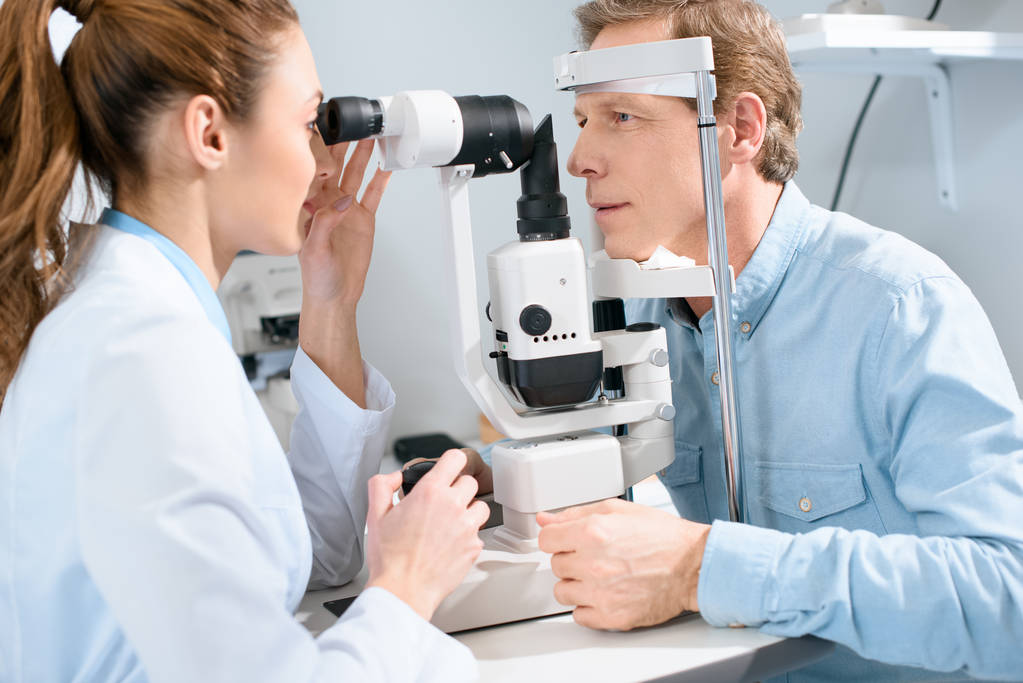
An ophthalmologist is a medical doctor trained in medical and surgical eye care. An optometrist is a doctor of optometry trained to provide primary vision care, prescribe glasses and contact lenses, perform eye exams, detect eye disease, manage certain eye conditions within scope, and refer when medical or surgical care is needed. If you are searching for the right specialist, the easiest way to decide is to start with your main concern.
Dr. James C. Loden from Loden Vision Centers explains that eye exams help patients understand their vision, identify eye health needs, and choose the right care path for routine, medical, or surgical concerns.
The National Eye Institute explains that there are two basic types of eye doctors, optometrists and ophthalmologists, and that the best choice depends on a patient’s eye care needs.
The American Academy of Ophthalmology describes ophthalmologists as medical doctors who diagnose and treat eye disease, perform surgery, and prescribe glasses and contact lenses.
The practical difference is not about which provider is “better.” The practical difference is about which provider fits the problem.
Why this choice is simpler than it sounds
This choice is simpler than it sounds because most eye care needs fall into a few clear categories. If you need a routine eye exam, a prescription update, glasses, contact lenses, or a first look at a stable vision concern, an optometrist can often be the right starting point. If you have cataracts, surgical questions, advanced eye disease, complex medical symptoms, or sudden, serious vision changes, an ophthalmologist may be the safer choice.
Optometrists often function as primary eye care providers. Machon describes optometrists as practitioners who provide primary vision and eye care, including diagnosis, triage, use of diagnostic technology, and referral when needed.
Harris also notes that optometry has moved beyond traditional refractive care into broader primary eye care, supported in many settings by diagnostic tools such as slit lamps, visual fields, pachymetry, gonioscopy, and optical coherence tomography.
Ophthalmologists bring medical and surgical training to the care path. The American Academy of Ophthalmology states that ophthalmologists complete medical training and specialized ophthalmology training, which allows them to provide medical and surgical care for eye disease.
The simplest rule is this: start with the provider whose training matches the next decision your eyes need.
How routine eye exams keep everyday vision on track
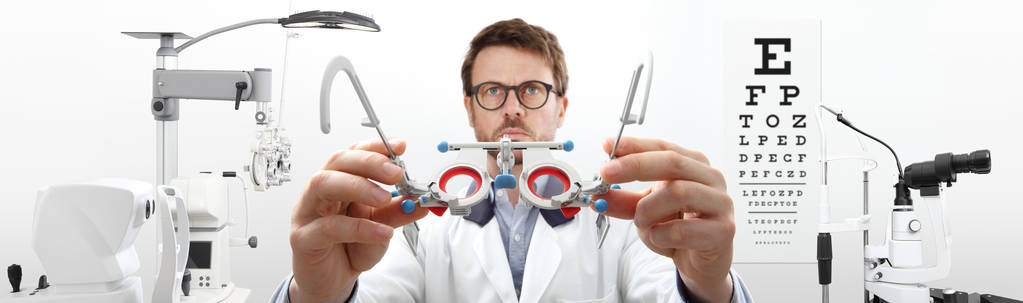
Routine eye exams keep everyday vision on track because they do more than update a prescription. A routine exam can measure visual clarity, check refractive error, evaluate eye teaming and focusing, assess the eye surface, and screen for signs that may need medical follow-up. For many patients, this is where optometry is especially useful.
The National Eye Institute notes that eye doctors can check for refractive errors as part of a comprehensive eye exam, which may include reading letters at near and far distances and dilation to check for other eye problems.
That means a routine exam can answer the everyday question, “Do I need glasses or contacts?” while also helping identify whether something more medical may be happening.
Routine eye exams are especially helpful for people who use screens for long hours, wear contact lenses, drive at night, experience dry eye symptoms, have headaches with near work, or notice gradual prescription changes. A patient who simply needs sharper distance vision may leave with a glasses prescription. A patient whose “blur” is actually cataract glare, dry eye, corneal irregularity, or retinal disease may need a different plan.
A routine eye exam is not just a vision check. It is a checkpoint for how your eyes are functioning in real life.
Naidoo and Govender describe a team approach to refractive error services, where optometrists and other trained providers play important roles in eye exams, refraction, screening, and referral when needed.
This matters because everyday vision care works best when simple needs are handled efficiently and more complex needs are sent to the right level of care.
When medical eye disease calls for surgical-level expertise
Medical eye disease calls for surgical-level expertise when diagnosis, treatment, or follow-up may involve advanced medication management, laser treatment, injections, surgery, or complex disease monitoring. Cataracts, advanced glaucoma, retinal disease, corneal disease, serious trauma, some infections, inflammatory eye disease, and sudden vision loss may require ophthalmology-level care.
The American Academy of Ophthalmology explains that a comprehensive ophthalmologist can diagnose and treat eye disease, perform eye surgery, and prescribe and fit glasses or contact lenses.
This is why an ophthalmologist is often the right provider when the patient needs more than optical correction.
Cataracts are a clear example. An optometrist may identify cataract signs and monitor early symptoms, but cataract surgery is performed by an ophthalmologist. Glaucoma is another example. Some lower-risk glaucoma suspects may be monitored in collaborative care models, but patients with progression, advanced disease, surgical needs, or complex risk factors often require ophthalmology management.
Jamous and colleagues found that a collaborative model for glaucoma referrals helped improve appropriate referrals to ophthalmologists and supported better use of resources.
Harper and colleagues also discuss the need for risk-based glaucoma pathways that include optometrists while recognizing the importance of training, accreditation, and proper case selection.
Surgical-level expertise matters when the next step may change the structure of the eye.
Why glasses, contacts, cataracts, and LASIK need different conversations

Glasses, contacts, cataracts, and LASIK need different conversations because they solve different problems. Glasses and contact lenses correct how light focuses. Cataract surgery replaces a cloudy natural lens. LASIK reshapes the cornea to reduce dependence on glasses or contacts. Each choice has different candidacy requirements, risks, benefits, costs, recovery expectations, and alternatives.
A patient who needs glasses may only need a refraction and eye health screening. A contact lens wearer needs lens fit, corneal health, tear film quality, comfort, and infection risk evaluation. A cataract patient needs lens clarity assessment, functional impact discussion, surgical timing, lens implant choices, and recovery planning. A LASIK candidate needs corneal mapping, prescription stability, tear film evaluation, pupil and prescription assessment, retinal review, lifestyle discussion, and risk tolerance counseling.
This is where optometrists and ophthalmologists can complement each other. An optometrist may help identify that a patient’s prescription is changing, contact lenses are no longer comfortable, or glare may be cataract-related. An ophthalmologist may determine whether cataract surgery, LASIK, PRK, SMILE, EVO ICL, refractive lens exchange, or another procedure is medically appropriate.
Patient goals also matter. An athlete may want less dependence on contacts. A driver may care most about night glare. A screen-heavy worker may need dry eye control before any vision correction decision. A patient over 40 may need a presbyopia conversation, not just a distance prescription. A cautious patient may prefer glasses or contacts. A motivated surgical candidate may want to compare benefits, recovery, cost, and safety.
The best vision correction conversation does not start with a procedure. It starts with the patient’s eyes, lifestyle, and risk profile.
How technology helps both providers spot problems sooner.

Technology helps both providers spot problems sooner because many eye diseases are easier to track when measurements and images can be compared over time. Retinal photography, optical coherence tomography, corneal topography, visual field testing, eye pressure measurement, and digital referral tools can help identify concerns that may not be obvious from symptoms alone.
Goudie and colleagues found that attaching digital images to optometry referrals improved ophthalmology triage quality, helped detect sight-threatening disease earlier, and allowed more appropriate allocation to specialist clinics.
Constantin and colleagues found that optometrists supported retinal image sharing and expected image-sharing systems to improve collaboration between optometry and ophthalmology.
Technology also supports triage. Carrasco Solís and colleagues found high agreement among optometrist-supported teleophthalmology, in-person ophthalmology, and related diagnostic categories in a primary care eye disease triage model.
This does not mean technology replaces doctors. It means technology can help the right doctor see the right information sooner.
A good image does not make the diagnosis by itself. A good image gives the care team better evidence.
When choosing the right provider protects your time and peace of mind
Choosing the right provider protects your time and peace of mind because it helps you avoid unnecessary delays and repeated appointments. If your concern is routine, an optometrist may help you get answers quickly. If your concern is medical or surgical, going directly to an ophthalmologist may save time. If you are unsure, a comprehensive eye exam can help determine the safest next step.
Shared care can benefit patients when it is clear and well-organized. O’Connor and colleagues found that shared care for chronic eye diseases could reduce patient waiting time and support localized care, with patients reporting travel-time savings and satisfaction with care.
Tahhan and colleagues found that a collaborative model for low-risk diabetic eye care reduced wait times and costs while maintaining substantial agreement between optometrists and ophthalmologists.
Cost and insurance should also guide the visit. Routine vision exams, medical eye exams, contact lens fittings, retinal imaging, LASIK evaluations, cataract consultations, and glaucoma testing may be handled differently by insurance. The reason for the visit often affects how the visit is billed. Patients should ask what type of appointment they need, what testing may be recommended, and what options exist if treatment is not urgent.
Red flags should move the visit faster. Sudden vision loss, eye injury, new flashes with floaters, a curtain or shadow, severe eye pain, new double vision, or painful redness should not wait for a routine appointment. These symptoms may need urgent ophthalmic evaluation.
The final takeaway is simple. Optometrists often help with routine eye exams, glasses, contacts, and first-line vision concerns. Ophthalmologists provide medical and surgical care when eye disease, advanced treatment, surgery, or complex symptoms enter the picture. The easy way to decide is to match the provider to the question your eyes are asking today.
References
[1] “Finding an Eye Doctor,” by National Eye Institute, 2024.
[2] “Differences in Education Between Optometrists and Ophthalmologists,” by American Academy of Ophthalmology, accessed 2026.
[3] “Optometrists’ Scope of Practice,” by Kirsty Machon, 2017.
[4] “The Boundaries of Optometric Practice,” by A. Harris, 2014.
[5] “Refractive Errors,” by National Eye Institute, 2025.
[6] “A Team Approach to Providing Refractive Error Services,” by K. Naidoo and Pirindhavellie Govender, 2014.
[7] “Ophthalmology Subspecialists,” by American Academy of Ophthalmology, 2023.
[8] “Clinical Model Assisting With the Collaborative Care of Glaucoma Patients and Suspects,” by Khalid F. Jamous, M. Kalloniatis, M. Hennessy, A. Agar, A. Hayen, and B. Zangerl, 2015.
[9] “Transforming Glaucoma Care Pathways: Current Glaucoma Accreditation in UK Optometry,” by R. Harper, Patrick J. G. Gunn, P. Spry, C. Fenerty, D. Crabb, and Michael Bowen, 2021.
[10] “Ophthalmic Digital Image Transfer: Benefits to Triage, Patient Care and Resource,” by C. Goudie, D. Lunt, Suzanna Reid, and R. Sanders, 2014.
[11] “Optometrists’ Perspectives Regarding Artificial Intelligence Aids and Contributing Retinal Images to a Repository: Web-Based Interview Study,” by A. Constantin, Malcolm Atkinson, M. Bernabeu, Fiona Buckmaster, Baljean Dhillon, Alice D. McTrusty, Niall C. Strang, and Robin Williams, 2022.
[12] “Effective Validation of Primary Care Patient Triage Classification Via Tele-Ophthalmology With Optometrist Support,” by Rafael Carrasco Solís, María Rosario Rodríguez Griñolo, Beatríz Ponte Zúñiga, Beatriz Mataix Albert, María Leticia LLedó de Villar, María José González Troncoso, Rocío Martínez de Pablos, and Enrique Rodríguez de la Rúa Franch, 2025.
[13] “Shared Care for Chronic Eye Diseases: Perspectives of Ophthalmologists, Optometrists and Patients,” by P. O’Connor, C. Harper, C. Brunton, S. Clews, S. Haymes, and J. Keeffe, 2012.
[14] “Evaluating the Cost and Wait-Times of a Task-Sharing Model of Care for Diabetic Eye Care: A Case Study From Australia,” by N. Tahhan, Belinda K. Ford, B. Angell, G. Liew, Joseph Nazarian, G. Maberly, P. Mitchell, Andrew J. R. White, and L. Keay, 2020.