

Blog
The Growing Impact of Digital Solutions in Everyday Travel


Travel and transportation have changed dramatically with the rise of digital technology. From smarter vehicles and real time navigation to connected driving experiences, digital solutions are making everyday travel safer, easier, and more convenient. Whether commuting to work, planning road trips, or managing transportation services, technology now plays a major role in how people move through daily life.
Modern vehicles are no longer just machines for transportation. They now include smart sensors, voice assistants, advanced safety features, and personalized systems designed to improve comfort and efficiency. Digital tools are also helping automotive industry companies build smarter vehicles, improve reliability, and create more seamless travel experiences for consumers.
As innovation continues to evolve, digital transformation is shaping the future of everyday travel through connected systems, automation, and intelligent mobility solutions that improve convenience and overall quality of life.
How Digital Solutions Are Transforming Everyday Travel

Software Defined Vehicles (SDVs)
Modern cars are increasingly treated as smart devices on wheels. Advanced software architectures allow for real time navigation, ADAS (Advanced Driver Assistance Systems), and “functions on demand” where users can activate new features after purchasing the vehicle.
AI Driven R&D and Manufacturing
Automakers are accelerating time to market by using Siemens Digital Transformation tools. AI and “digital twins”—virtual replicas of vehicles and factories allow engineers to run crash simulations, test EV battery lifecycles, and optimize production before building physical prototypes.
Digital Showrooms & Personalization
Car buyers expect seamless online purchasing experiences. Brands like BMW utilize AR/VR visualizers to let customers interact with full sized virtual models of cars right from their smartphones before visiting a dealership.
Connected Ecosystems
Automakers are shifting towards personalized user experiences. Modern in cabin AI assistants (such as BMW’s Intelligent Personal Assistant or Kia’s R.E.A.D) analyze voice commands and passenger facial expressions to adjust cabin temperatures and entertainment systems.
Supply Chain Resilience
Digital solutions like IoT sensors and blockchain enable ITONICS Automotive Trends tracking to reduce costs, automate procurement, and build resilient networks to bypass global logistics bottlenecks.
To dive deeper into the latest strategies driving this transformation, you can explore comprehensive market data via the Deloitte Global Automotive Consumer Study, which highlights shifting consumer preferences for AI-driven personalization and connected features.
Why Automotive Companies Are Embracing Digital Systems
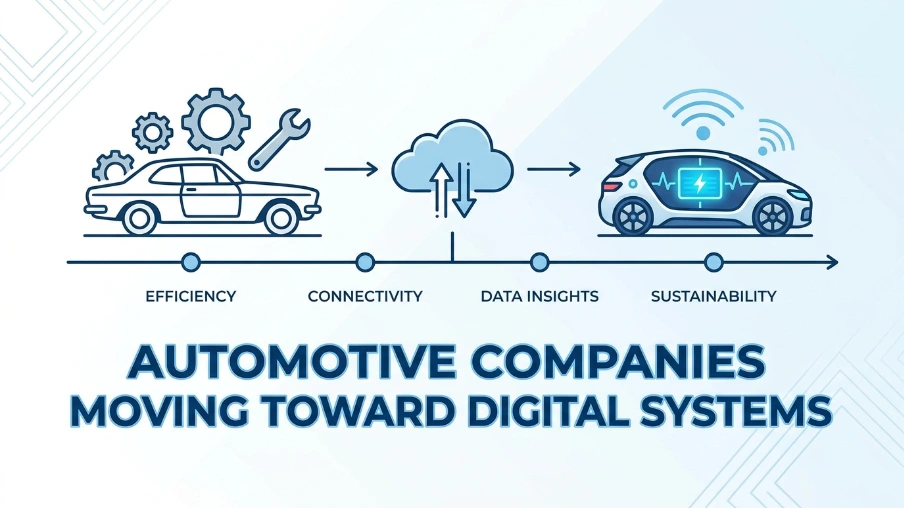
Digitization and automation are significantly changing how automotive companies operate. Traditional, paper based processes have largely been replaced by digital systems and solutions, such as electronic data interchange, that improve communication and coordination across the supply chain.
- A major benefit is more efficient handling of information. Tools like optical character recognition help extract and process data quickly, supporting automation and improving accuracy. This enables better collaboration and quicker decision making across departments.
- Digitized data is easier to store, protect, and analyze, helping companies comply with industry regulations and streamline operations. These systems also support a more customer focused approach, aligning with expectations for faster, more seamless digital interactions.
Challenges of Digitalization in the Automotive Industry
Digitalization is transforming the automotive industry, but it also creates several challenges for manufacturers and businesses.
1. High Costs
Implementing digital technologies requires heavy investment in software, smart equipment, cybersecurity, and employee training. Smaller companies often struggle with these ongoing expenses.
2. Cybersecurity Risks
Connected vehicles collect and share large amounts of data, making them vulnerable to hacking and data breaches. Protecting customer privacy has become a major concern.
3. Skill Shortages
Modern automotive systems need skilled professionals in AI, software, and data analytics. Many companies face difficulties finding and training qualified workers.
4. System Integration Problems
Integrating new digital tools with older manufacturing systems can be expensive and technically challenging. Legacy infrastructure often slows digital transformation.
5. Rapid Technological Changes
Technology evolves quickly, forcing companies to continuously upgrade systems and processes to remain competitive.
Future Trends in Automotive Digitalization
The future of the automotive industry will be shaped by even deeper digital integration and intelligent mobility solutions. Several emerging technologies are expected to play a major role in this transformation.
| Future Trend | Impact on Automotive Industry |
|---|---|
| Electric Vehicles (EVs) | Increased focus on smart battery systems, charging infrastructure, and sustainable mobility |
| Autonomous Driving | Advanced AI, sensors, and real time data processing for self driving capabilities |
| Artificial Intelligence (AI) | Improved vehicle design, predictive maintenance, automation, and customer support |
| Blockchain Technology | Greater transparency, secure transactions, and improved supply chain management |
| 5G Connectivity | Faster communication between vehicles, infrastructure, and smart traffic systems |
| Internet of Things (IoT) | Enhanced vehicle connectivity and real time monitoring capabilities |
Electric and Autonomous Vehicles
The rise of electric vehicles and self driving technology will continue accelerating digital innovation in the automotive sector. Smart systems will play a central role in battery management, navigation, safety, and autonomous decision making.
Growing Role of Artificial Intelligence
AI will become increasingly integrated into manufacturing, quality control, predictive maintenance, customer experience, and autonomous driving systems. Automotive companies will rely more on AI-powered analytics to improve efficiency and reduce operational costs.
Blockchain for Secure Operations
Blockchain technology is expected to improve transparency within the automotive supply chain. It can help manufacturers securely track components, prevent fraud, and create safer digital transactions between suppliers, manufacturers, and customers.
Expansion of 5G Connectivity
The introduction of 5G networks will significantly improve vehicle to vehicle and vehicle to infrastructure communication. Faster and more reliable connectivity will support autonomous driving, real time navigation updates, smart traffic management, and enhanced connected car experiences.
As digital transformation continues to evolve, the automotive industry is moving toward a future driven by intelligent systems, automation, connectivity, and sustainable innovation.
The centrality of software updates
Cars are increasingly dependent on their internal computers. While a couple of decades ago, these were relatively simple and could last the car’s entire lifetime, today, these computers often operate using software that needs to be updated.
Many manufacturers are able to deploy these updates OTA (over the air), meaning that the vehicles don’t need to be brought into a brick and mortar location to be updated. This is far more convenient, and improves most people’s modern car ownership experience.
Key management
- There are also all sorts of digital innovations nowadays when it comes to automotive keys and key management. Most keys are themselves digital nowadays, with some cars even using phone apps instead of a distinct, physical key.
- What’s more, there are a lot of key management solutions available for businesses like car dealerships and rental agencies. Whether that’s an after hours key kiosk from somewhere like KEYper Systems, or an automatically updated digital logbook that’s connected to one of these physical devices, these systems can have a massively beneficial impact on your overarching business operations.
ADAS and self driving vehicles
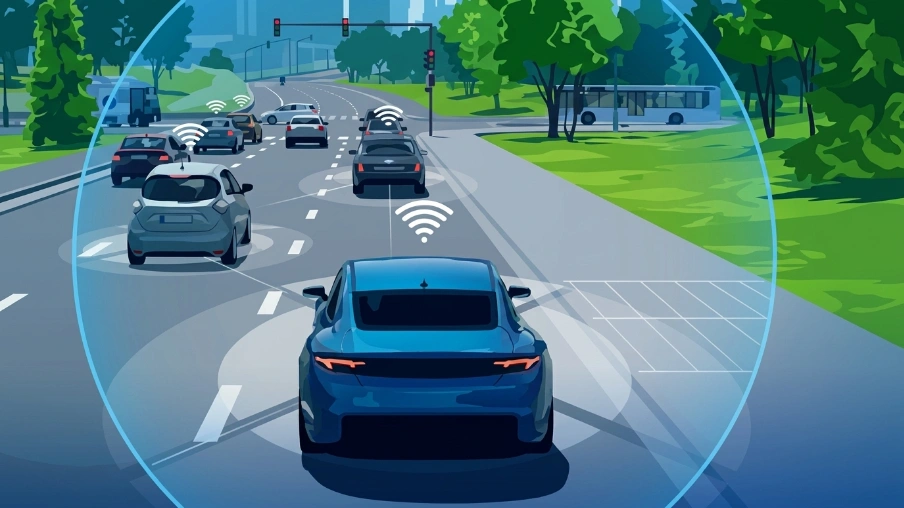
- For a while, advanced driver assistance systems comprised cruise control and little else. Nowadays, we also have lane keeping, automatic emergency braking and adaptive cruise control as a standard option on many models.
- Many automotive manufacturers are racing towards complete automated driving, and we’re currently at the final stages of real world testing. It’s likely an area that will see huge commercial developments over the coming years, and is definitely worth keeping in mind.