

Blog
Custom EHR Implementation: A&I Solutions Timeline

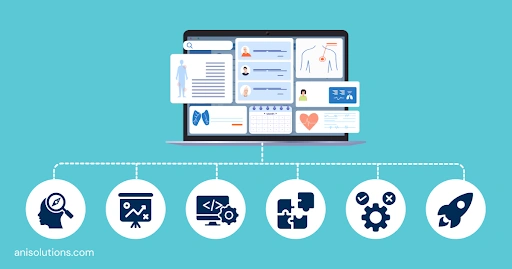
Imagine your organization invests millions in EHR systems, yet many implementations still fall behind schedule or exceed their budget.
That sounds really frustrating, right?
Well, the study also shows that healthcare IT projects frequently face delays due to poor planning, unclear requirements, and workflow misalignment.
Here, the main problem is that building a custom EHR is far more than a software project. It can affect clinicians, administrators, billing teams, and IT departments as well.
When all these stakeholders are not aligned from the beginning, even the most advanced technology can create more headaches than solutions.
Missing integrations, incomplete data migration plans, inadequate infrastructure, and changing project goals can become obstacles that silently slow progress. As a result, costs rise, the EHR development timeline extends, and user adoption suffers before your organization even realizes it.
This is where proper preparation makes all the difference. Successful custom EHR implementation begins before development starts. Healthcare organizations should align operational workflows with technical capabilities to make sure that the system supports not only patient care but also business objectives.
Strong healthcare technology planning lays the groundwork for smoother execution and fewer surprises down the road. Because of these technical prerequisites, planning custom EHR project activities becomes the foundation of long-term success.
Let’s see how to plan a successful custom EHR implementation project and examine the key technical requirements before developing a custom EHR system so healthcare organizations can build solutions that are scalable, efficient, and ready for the future.
Defining Requirements and Project Scope
Once your organization understands why planning matters, the next key step is to define what the EHR system should actually achieve. After all, even the best technology cannot solve issues that have not been clearly identified.
A custom EHR must support clinical care, daily operations, and business growth at the same time. Clinicians are expecting faster charting and fewer clicks. Clinicians want faster charting and fewer clicks. Administrative teams need smoother scheduling, billing, and reporting. Leadership wants a system that delivers value and supports future expansion. Defining these goals early keeps everyone on the same page and helps prevent scope creep later.
Before building a new system, it is equally important to understand where the current one falls short. Look at how staff handle patient check-ins, documentation, and billing tasks. If teams rely on spreadsheets, sticky notes, or manual processes, those are clear signs that existing workflows need improvement. As the saying goes, the cracks in the wall often show where repairs are needed.
Another key step is gathering input from stakeholders early. Physicians, nurses, billing teams, administrators, and IT staff use the EHR in different ways. Involving them from the start ensures the system is built around real needs instead of assumptions. It also creates buy-in and makes adoption easier during go-live.
Finally, set realistic timelines and expectations. A successful custom EHR implementation involves planning, development, testing, training, and deployment. Rushing the process may seem faster, but it often leads to delays later. Good planning today saves bigger problems tomorrow.
By defining goals, understanding workflows, and involving the right people, organizations strengthen their healthcare technology planning efforts and create a solid foundation for the technical steps ahead.
Technical Foundations for a Successful EHR Project
Once you know what you’re building, you need to confirm you can actually support it. This is where careful healthcare technology planning separates projects that scale from those that stall.
- Assessing infrastructure, security, and compliance needs
Any EHR handling protected health information has to meet HIPAA requirements for data security, access controls, and audit logging. That’s not a feature to add later, it’s a foundation to design around from day one. Evaluate whether your hosting environment, encryption standards, and backup processes can support the system you’re planning, and where they need to be upgraded.
- Planning integrations with existing healthcare systems
Few practices run on a single system. Your EHR will likely need to connect with labs, pharmacies, billing platforms, and possibly external provider networks. Mapping these connections early and confirming they rely on recognized standards like HL7 and FHIR, keeps integration from becoming the bottleneck it so often is.
- Preparing for data migration and interoperability requirements
Migrating years of patient records is rarely clean. Legacy data is often inconsistent, incomplete, or stored in formats the new system doesn’t recognize. Auditing data quality before migration, deciding what to bring over, and planning how records map into the new structure prevent the post-launch scramble that follows rushed migrations.
- Building a scalable foundation for future growth
The system that fits your practice today should still fit it when you’ve added providers, locations, or service lines. Designing with scalability in mind like flexible architecture, modular features, capacity to handle more users and data, protects the investment well beyond go-live.
These are the key technical requirements before developing a custom EHR system, and skipping them doesn’t save time. It just moves the delay to a worse moment.
From Development to Deployment
With foundations set, the work shifts to building and preparing for launch. A disciplined EHR deployment strategy keeps this phase from sprawling.
- Prioritizing features and implementation phases
Trying to launch every feature at once is a common and costly mistake. Identify what’s essential for day-one operations and what can follow in later phases. A phased rollout lets staff adjust gradually and gives the team room to fix issues before they compound.
- Testing workflows, integrations, and system performance
Testing isn’t a final checkbox, it’s continuous. Validate that clinical workflows function as intended, integrations pass data correctly, and the system holds up under real load. Involve end users here. They’ll surface friction that no technical test catches.
- Preparing staff training and change management plans
Even an excellent system fails if people don’t know how to use it or resent being made to. Training should be role-specific and hands-on, and change management should address the natural anxiety that comes with disruption. Communicate early, explain the why, and give staff a channel to raise concerns.
- Reducing risks before go-live
The weeks before launch are for closing gaps: resolving outstanding bugs, confirming data integrity, and finalizing fallback procedures if something fails. A clear-eyed risk review at this stage prevents the worst kind of surprise, the one discovered with patients in the waiting room.
Launching and Optimizing the Platform
Go-live is a milestone, not a finish line. The first weeks after launch determine whether the system becomes an asset or a frustration.
- Managing data migration and final readiness checks
Final migration should be carefully sequenced, with verification that records are transferred accurately and completely. A pre-launch readiness checks systems, integrations, access, support coverage and confirms the organization is genuinely prepared, not just scheduled.
- Monitoring adoption and user feedback after launch
Watch how the system is actually being used in the first days and weeks. Are clinicians charting in it or routing around it? Where are the tickets clustering? Early feedback reveals what training missed and what genuinely needs fixing.
- Optimizing workflows based on real-world usage
No plan survives contact with daily use unchanged. Some workflows that look clean on paper create friction in practice. Treat the post-launch period as a tuning phase, refining configurations and processes based on how the system performs in the real world.
- Creating a roadmap for ongoing improvements
An EHR is a living platform. Regulations shift, the practice evolves, and new needs emerge. A roadmap for ongoing updates, added features, and continued optimization keeps the system aligned with the organization as both change.
Conclusion
The organizations that succeed with a custom EHR implementation are rarely the ones with the biggest budgets or the fastest timelines. They’re the ones who prepared.
Preparation is what turns a high-risk technology project into a manageable one. When technology, workflows, and business goals are aligned from the start, development becomes execution instead of guesswork. EHR project planning, including clear requirements, sound infrastructure, mapped integrations, and a well-defined adoption strategy, is what reduces risk and accelerates the adoption every project ultimately depends on.
Platforms such as the A&I custom healthcare platform further support organizations by providing the flexibility needed to align technology with unique clinical and operational needs.
The build will get attention. But the planning is what determines whether that build was worth it. Treat the groundwork as the project’s most important phase, because that’s exactly what it is.
Frequently Asked Questions
- What are the technical prerequisites for a custom EHR project?
The core prerequisites are secure, HIPAA-compliant infrastructure with proper access controls and audit logging, clearly defined integration needs, a documented data migration plan, interoperability standards like HL7 and FHIR, and a scalable architecture that can support more users and data as the practice grows.
- How long does a typical custom EHR implementation take?
Timelines vary with scope and complexity, but most custom EHR projects run from several months to over a year. That span covers requirements gathering, development, integration, testing, staff training, and a phased go-live. Rushing any of those stages tends to push problems into the launch rather than save time.
- What factors should healthcare organizations evaluate before starting an EHR project?
Organizations should assess their clinical and operational goals, current workflow gaps, infrastructure and security readiness, integration requirements, and data migration needs. Equally important are realistic budget and timeline expectations, plus early input from the clinicians and staff who will rely on the system every day.
- How important is data migration planning during EHR implementation?
It’s critical. Legacy records are often inconsistent or incomplete, and poorly planned migration risks data loss, errors, and delays. Auditing data quality, deciding what to carry over, and mapping records into the new structure before go-live prevents the messy post-launch cleanup that derails so many projects.
- What integrations should be considered before developing a custom EHR?
Common integrations include lab systems, e-prescribing and pharmacy networks, and billing or revenue cycle platforms. Many practices also need to connect with external provider networks or health information exchanges. Confirming these connections rely on recognized standards like HL7 and FHIR keeps integration from becoming a late-stage bottleneck.
- How can healthcare organizations reduce implementation risks?
Risk drops when timelines are realistic and rollouts are phased rather than all-at-once. Continuous testing, early stakeholder involvement, and thorough role-specific training all help. A clear-eyed readiness review before go-live — covering systems, data integrity, and fallback procedures — catches gaps while there’s still time to fix them.
- What role does staff training play in EHR adoption?
A central one. Even a well-built system fails if people don’t know how to use it or resent being forced to. Role-specific, hands-on training paired with genuine change management determines whether staff fully adopt the platform or quietly build workarounds that undermine the investment.
- What should organizations include in an EHR deployment strategy?
A strong deployment strategy covers feature prioritization, phased implementation, and comprehensive testing of workflows and integrations. It should also include training and change management, risk mitigation ahead of go-live, and a post-launch optimization roadmap so the system keeps improving based on real-world use rather than stalling after launch.