Cardiovascular disease remains the leading cause of mortality worldwide, driving a surge of interest in molecular pathways that can enhance cardiac repair and mitochondrial performance. Among the most compelling new research avenues are peptides short amino acid sequences capable of regulating energy metabolism, reducing ischemic injury, and improving vascular integrity.
Presents a detailed, mechanistically oriented overview of such peptide-therapeutics relevant to cardiac protection and myocardial resilience. We discuss key molecular pathways, specific peptide families, translational hurdles, and research gaps.
Mitochondrial Restoration and Energy Efficiency
Microvascular perfusion is essential for cardiac oxygen delivery and repair. Several peptide classes including thymosin β4, adrenomedullin analogs, and endothelial-derived peptides have shown angiogenic and vasoprotective effects.
Thymosin β4 (Tβ4) stimulates endothelial migration and neovascularization through upregulation of VEGF and integrin-linked kinases (6). Post-myocardial infarction (MI) studies in rodents revealed enhanced capillary density and reduced fibrotic area following peptide administration (7). Tβ4 also activates AKT and MAPK pathways, both of which promote cardiomyocyte survival under hypoxic stress (8).
Adrenomedullin (ADM) analogs exhibit vasodilatory and endothelial barrier-stabilizing actions. Research indicates that ADM protects the glycocalyx, limits vascular leakage, and decreases oxidative stress during sepsis and ischemia (9). In preclinical cardiac studies, ADM analogs improved coronary blood flow and reduced inflammatory infiltration (10).
Together, these findings demonstrate that angiogenic and endothelial-targeting peptides contribute to the structural and metabolic recovery of ischemic myocardium.
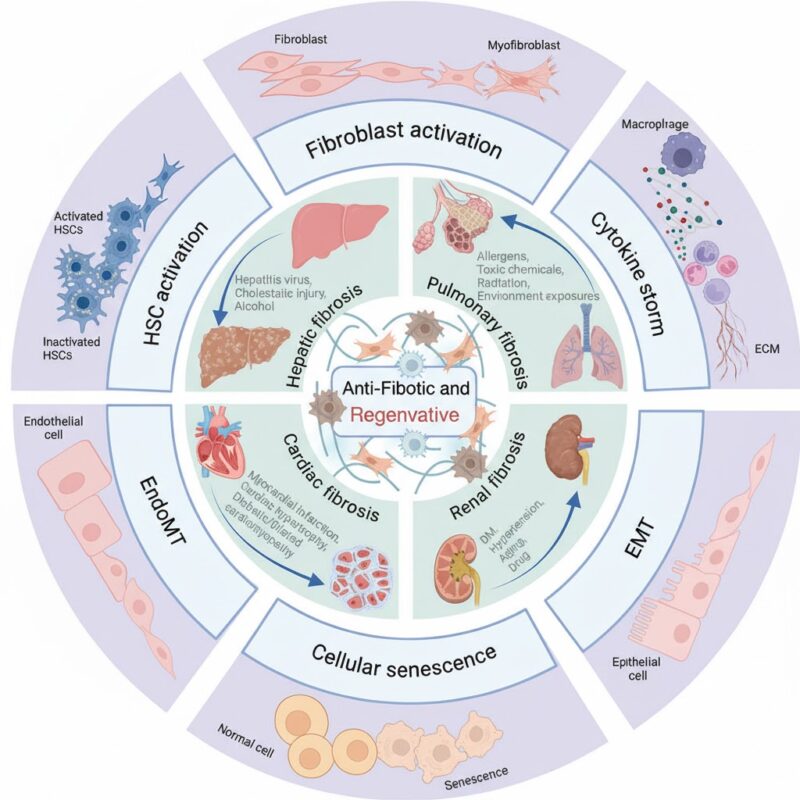
Anti-Fibrotic and Regenerative Mechanisms
Anti-Fibrotic and Regenerative Mechanisms
Cardiac fibrosis impairs elasticity and disrupts electrical conduction, leading to progressive heart failure. Recent studies show that specific peptides can limit fibroblast activation and promote regenerative repair.
Ac-SDKP (N-acetyl-seryl-aspartyl-lysyl-proline), a tetrapeptide derived from thymosin β4, has demonstrated potent anti-fibrotic properties.
It inhibits TGF-β-induced collagen synthesis, reducing myocardial fibrosis in hypertensive and diabetic models (11).
GHK-Cu, although primarily studied for wound healing, has displayed cardioprotective effects via modulation of inflammatory cytokines and collagen turnover. In cardiac fibroblast models, GHK-Cu downregulated MMP-2 and increased collagen cross-linking integrity (13).
Peptides that can simultaneously reduce fibrosis and encourage angiogenesis like Tβ4 and Ac-SDKP represent promising dual-action agents for cardiac repair research.
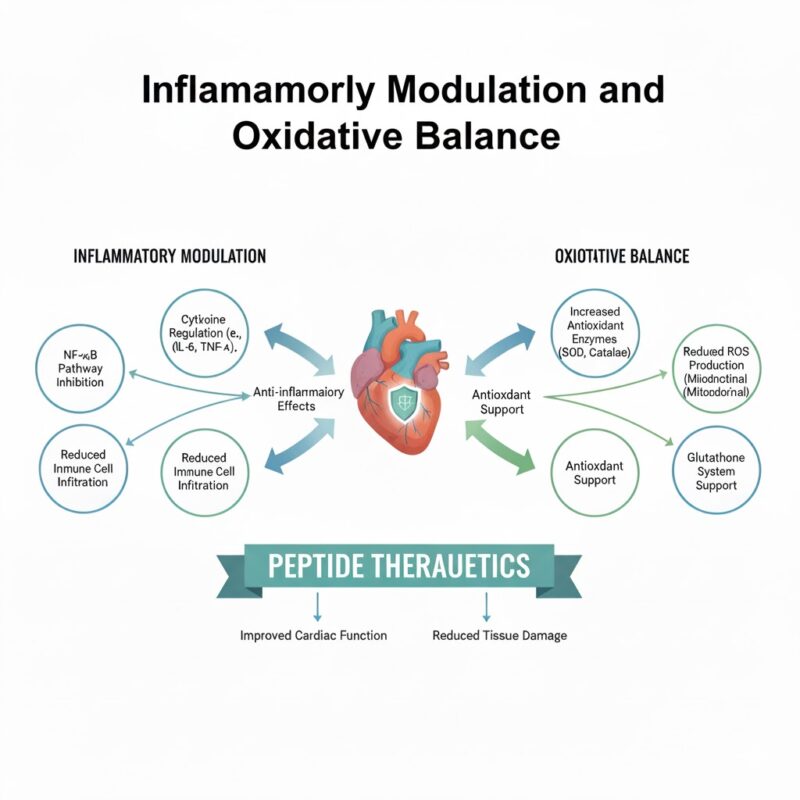
Inflammatory Modulation and Oxidative Balance
Inflammatory Modulation and Oxidative Balance
Inflammation and oxidative stress play central roles in cardiac injury progression. Targeting these processes through peptide-mediated signaling is a rapidly expanding field.
Humanin has demonstrated the ability to reduce TNF-α, IL-6, and reactive oxygen species (ROS) in cardiomyocytes exposed to oxidative insult (14). Similarly, MOTS-c activates AMPK, enhancing autophagy and protecting mitochondrial integrity during reperfusion (15).
The mitochondrial tetrapeptide SS-31 reduces lipid peroxidation and prevents mitochondrial swelling, maintaining redox balance and preventing apoptosis (16). In diabetic cardiomyopathy models, SS-31 normalized cardiac ATP levels and reduced fibrosis (17).
These results suggest that mitochondria-targeted peptides can modulate inflammatory and oxidative cascades at their biochemical source, not merely their downstream effects.
Metabolic Adaptation and Endothelial Function
Metabolic flexibility—the ability of the heart to switch between fatty acid and glucose oxidation—is a hallmark of cardiac health. Mitochondrial peptides play a vital role in restoring this adaptability.
Studies show that MOTS-c upregulates genes involved in glucose metabolism while downregulating those involved in lipotoxic pathways (18).
In obese and insulin-resistant models, MOTS-c treatment improved endothelial nitric oxide levels and reduced systemic inflammation (19).
Additionally, CGRP analogs (calcitonin gene-related peptide) have emerged as potential protectants against ischemic vasoconstriction.
Its peptide derivatives have been shown to reduce infarct size and arrhythmia incidence in ischemic reperfusion models (21).
Endothelial peptides that enhance nitric oxide availability and reduce oxidative burden may provide synergistic effects when combined with mitochondrial-targeted agents in future cardiac research.
Future Research Directions
Peptide-based cardioprotection research continues to expand, integrating mitochondrial stabilization, angiogenesis, fibrosis prevention, and metabolic modulation into one unifying framework. The data indicate that small peptides can have multi-level benefits: improving ATP efficiency, restoring vascular function, and suppressing maladaptive remodeling.
Future directions include optimizing peptide delivery systems (such as injectable hydrogels and lipid carriers), exploring synergistic peptide combinations, and conducting standardized dose-response studies in preclinical settings. Furthermore, non-invasive imaging markers of mitochondrial health could accelerate translational research.
Benefits & Risks of Peptide Therapeutics for Physical & Mental Health
Szeto H.H., “SS-31 Redox and ROS Regulation,” PubMed PMID: 37687545.
Rosenthal R.E., “Diabetic Cardiomyopathy and SS-31,” PubMed PMID: 37263115.
Lee C., “MOTS-c Regulation of Glucose Oxidation,” PubMed PMID: 35840571.
Yang J., “Endothelial Function Restoration via MOTS-c,” PubMed PMID: 39552321.
Bevan J.A., “CGRP Analogs and Vascular Relaxation,” PubMed PMID: 38299844.
Huang J., “CGRP Cardioprotection and Arrhythmia Reduction,” PubMed PMID: 39105228.
About Laura Cuevas Gaitan (Health)
Laura Cuevas Gaitan is a passionate psychology-trained life coach who blends her academic background (MA in Psychology) with practical coaching strategies to help individuals improve both their personal and professional lives.
She works with people at different stages of their journey—whether they are navigating career transitions, striving for personal development, or seeking healthier relationships.
Personal Growth & Self-Discovery
Helping clients gain clarity about who they are and what they want in life.
Encouraging positive changes in mindset and daily habits.
Supporting emotional awareness and self-confidence.