

Blog
The Return of Classic Jewelry in Modern Fashion Trends


Not every trend deserves a comeback. Some things fade for good reasons — they were products of a specific moment, and that moment passed. But every so often something returns and it becomes clear that it never really left. It was just waiting for everyone else to catch up. That is more or less what has happened with classic jewelry over the past few years.
The pieces themselves never changed. What changed was the appetite for them.

Something Shifted
There was a period not long ago when more was more. Stacked necklaces, layered bracelets, earrings that could double as sculpture. It was fun for a while. Then it started to feel like noise.
The pullback was gradual at first. People started reaching for simpler pieces without fully articulating why. Cleaner looks started getting more attention. The word “timeless” stopped sounding like a cop-out and started sounding like something worth actually chasing. And somewhere in the middle of all that, classic jewelry found its footing again.
It was not a single trend that caused it. More like a slow accumulation of fatigue with everything disposable. Fast fashion, throwaway accessories, pieces that looked dated six months after purchase. People got tired of that cycle. They started looking for things that would still make sense years down the road.
Pearl Earrings Specifically

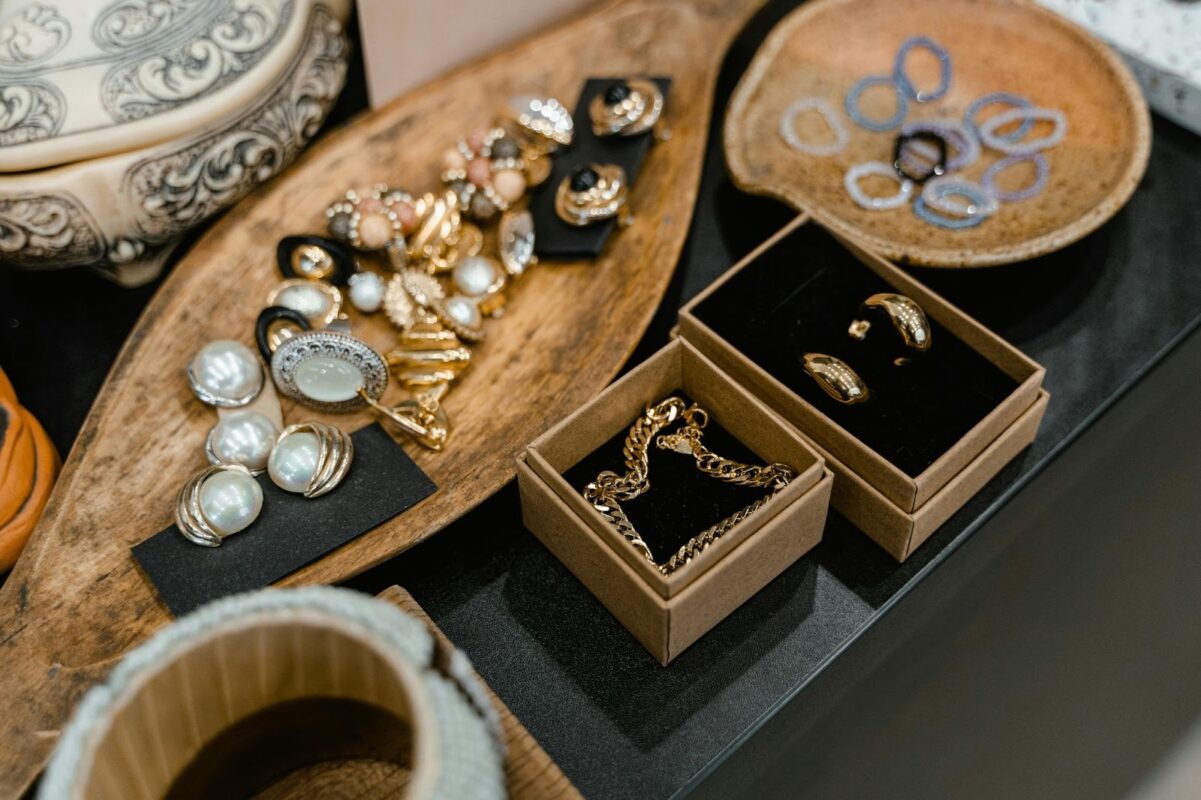
If one piece captures this shift better than any other, it is pearl earrings. That might sound like an odd claim. For a long time pearls carried a very specific image — formal, reserved, tied to a certain generation and a certain kind of occasion. That image kept a lot of people at arm’s length.
Then something interesting happened. Younger wearers started picking them up almost as a counterpoint. Pearl earrings with a leather jacket. Pearl studs under a baseball cap. The combinations should not have worked as well as they did. But they did work, and once that door opened it did not close again.
What those pairings proved was that pearl earrings were never really the problem. The framing was. Strip away the formal associations and what remains is just a genuinely beautiful, versatile accessory with a lot of history behind it. Once people started seeing them that way, the appeal made complete sense.
The Practical Case for Classics
Fashion conversations tend to focus on aesthetics, but there is a practical argument for classic jewelry that rarely gets enough attention.
Trendy pieces have a short window. They look right for a season, maybe two, and then they start to look like they belong to a specific moment in time. Anyone who has kept old costume jewelry around long enough knows exactly what that looks like. Classic pieces do not age that way. A good pair of pearl earrings bought twenty years ago looks the same today. In another twenty years it will look the same again.
That kind of consistency has real value — not just financially but practically. It simplifies getting dressed. There is no mental calculation about whether something still works. It works. It always works. That reliability is something a lot of people have started to genuinely appreciate, especially as wardrobe intentionality has become more of a priority than wardrobe size.
Styling Has Loosened Up
One reason classic jewelry struggled for a while was the rigidity around how it was supposed to be worn. Matched sets. Appropriate occasions. Specific outfits. Those rules made the pieces feel exclusive in the wrong way — not aspirational, just limiting.
That rigidity is mostly gone now. Pearl earrings show up in contexts that would have seemed jarring a decade ago and nobody blinks. They get mixed with other metals. They appear in asymmetrical pairings. Designers have pushed the pearl into unexpected shapes and settings that keep the material recognizable while making the piece feel entirely current.
The result is that classic jewelry now has room to breathe in a way it did not before. The pieces carry their history without being trapped by it. That balance — honoring what something is while leaving space for it to evolve — is genuinely difficult to achieve. The fact that pearls have managed it across so many different fashion eras says something about the material itself.
Buying With a Longer View
The broader shift underneath all of this is a change in how people think about purchasing. Not just jewelry — clothing, furniture, most things. The question used to be whether something was on trend. Increasingly the question is whether it will last.
That is a meaningful change. It pushes people toward quality over quantity. Toward pieces with some history or craft behind them rather than pieces designed to move quickly off a shelf. Classic jewelry benefits directly from that shift because it has always been built around longevity.
Pearl earrings bought today might end up in someone else’s jewelry box someday. That possibility — remote as it might seem at the point of purchase — changes the nature of the choice. It stops being about what is fashionable right now and starts being about what is worth keeping. More and more, that distinction is driving the conversation around jewelry. And classic pieces, almost by definition, tend to win it.