
Blog
The Real Prerequisites You Need Before Walking Into a Flight School


Most aspiring pilots focus exclusively on what happens after they enroll. They imagine themselves in the cockpit, learning to handle a control stick or collective, mastering radio communication, and building flight hours. But the months before you ever set foot in a classroom or strap into an aircraft determine whether you’ll actually succeed once training begins. The prerequisites to flight school are less obvious than they seem, and missing even one can derail your entire aviation career before it starts.
Key Takeaways
- Your FAA medical certificate is non-negotiable; obtain a medical exam before committing financially to a program
- Aircraft type decision (airplane versus helicopter) should drive your school choice, not the reverse
- Realistic financial planning prevents mid-training dropouts and career regret
- Study habits, self-discipline, and baseline aeronautical knowledge separate successful students from those who struggle
Why It Matters
Flight training is expensive, time-intensive, and psychologically demanding. You’ll spend between 60 and 250 hours in the air depending on your certification goal, plus hundreds of hours studying meteorology, aircraft systems, regulations, and navigation. Schools invest instructor time and aircraft resources into each student, and they expect you to show up already aware of what you’re signing up for. More importantly, the aviation industry is unforgiving. A pilot who didn’t think through their commitment before training began is a liability to themselves and everyone else in the cockpit.
- When you work with a flight training school, you’re joining a structured ecosystem where success depends on preparation, not just aptitude. Schools can teach you how to fly.
- They cannot teach you whether flying is actually the career you want, or whether your medical situation permits it, or whether your financial situation can sustain 18 months of intense study.
Medical Clearance: The Deal Breaker You Can’t Ignore
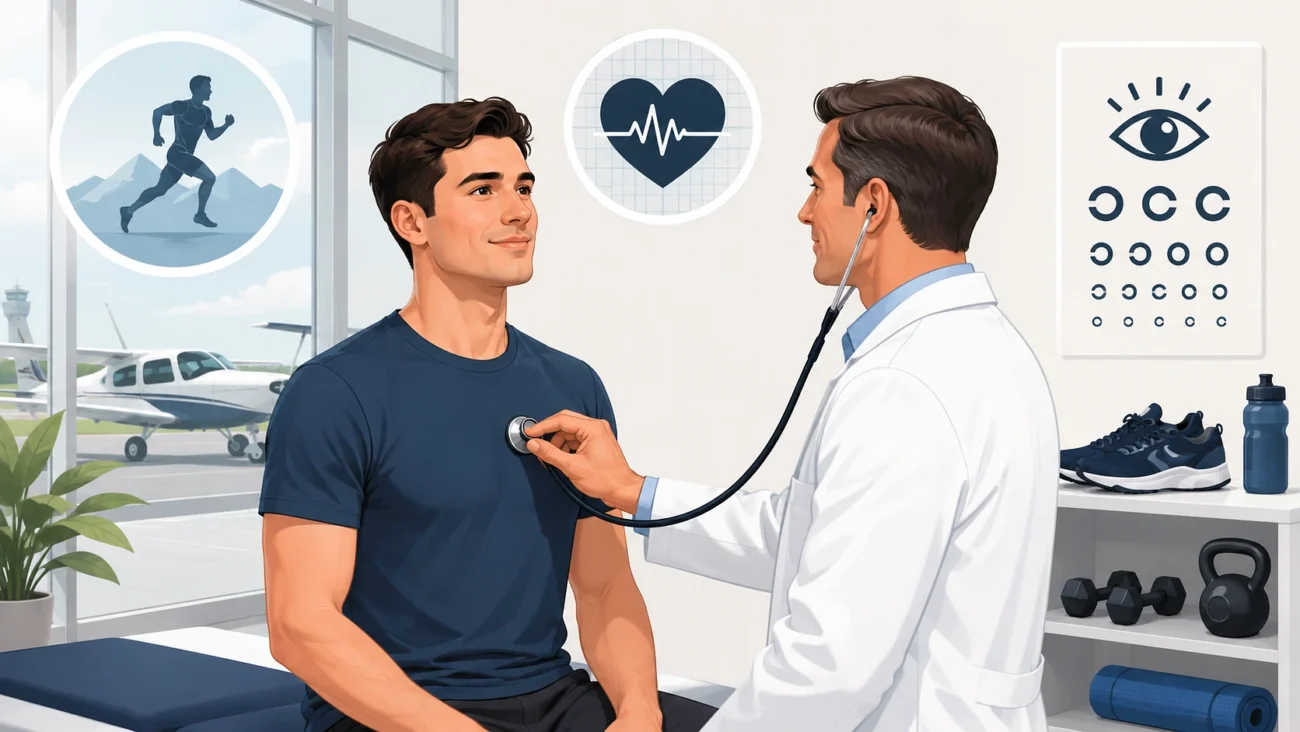
Before anything else, get your FAA medical exam. Not after you commit to a school. Not after you’ve saved the tuition. Now.
The FAA has strict medical requirements for pilot certification. You must be free of conditions that impair judgment, coordination, or spatial orientation. Common disqualifiers include uncontrolled diabetes, certain psychiatric medications, color blindness, and hearing loss. If the FAA medical examiner denies your medical certificate, you cannot legally operate an aircraft, full stop. No school refund will matter. No tuition payment will be recovered.
- Schedule a consultation with an aviation medical examiner (AME) before you enroll anywhere. The consultation costs under $200 and takes an hour. If there’s any question about your medical status, ask the AME upfront.
- Many aspiring pilots discover mid-training that a condition they never disclosed makes them ineligible for certification. That’s not just embarrassing. That’s financially catastrophic.
- Pro Tip: Find an AME who works with pilot candidates, not just general practitioners. They understand the FAA’s specific medical standards and can advise you on whether past medical history might create obstacles. Their guidance now prevents heartbreak later.
Aircraft Type: The Decision That Reshapes Your Entire Career Path
Airplane or helicopter. This choice matters more than most aspiring pilots realize. These are fundamentally different aircraft with different physics, different career markets, and different lifestyle implications. Airplane pilot training emphasizes smooth, efficient flight and long-distance navigation. Helicopter training prioritizes precision hovering, vertical takeoff and landing, and tactical decision-making in confined spaces. The training timelines differ. The job markets differ. The salary trajectories differ. And the cost structures differ significantly.
- Many schools specialize in one or the other. Choosing your aircraft type before choosing your school ensures you enroll somewhere equipped to deliver the training you actually need. If you walk into a school that prioritizes fixed-wing training because it’s cheaper or easier, you might end up flying the wrong aircraft for your goals.
- Think hard about what draws you to aviation. Emergency response Search and rescue Commercial airline operations Agricultural work Tourism Each career path aligns more naturally with either airplane or helicopter training.
- Spend time shadowing pilots in both disciplines if you can. Talk to professionals currently working in the roles you admire. Then choose your aircraft type, and then choose your school.
Financial Reality: How to Avoid Mid Training Collapse

Pilot training costs money. A lot of it. Depending on the certification level and aircraft type, you’re looking at anywhere from $40,000 to $180,000 before you hold a commercial pilot certificate and are employment-ready.
Before you commit to any school, sit down with a realistic budget. Calculate tuition, living expenses for the duration of training, aircraft rental fees for solo hours, and examination costs. Then add 15 percent for unexpected delays or additional training hours. Most students require more flight hours than the minimum curriculum specifies. Weather cancellations, personal mistakes, and the normal learning curve eat into both time and money.
Know your financing options. Some schools offer payment plans. The GI Bill covers training for military veterans. Some community colleges partner with flight schools on cost-sharing programs. Banks offer aviation loans, though interest rates vary widely. Federal student loans typically do not cover flight training, so investigate private financing early.
If you cannot afford the training without taking on debt, understand exactly how much debt you’re comfortable carrying. Aviation careers are rewarding, but they don’t guarantee six-figure salaries immediately after certification.
A pilot with $150,000 in training debt is under real financial pressure that affects their career decisions and quality of life for years. Be honest about your financial capacity before day one.
Study Habits and Baseline Aeronautical Knowledge
Flying is intellectually demanding. You must understand aircraft systems, aerodynamics, weather patterns, regulations, and navigation. These aren’t subjects you can gloss over with surface-level knowledge. Before you enroll, assess your ability to maintain focused study for six to eighteen months. Pilot training is not a part-time hobby. It demands consistent, daily engagement with technical material. If you’ve never been a strong student, or if you get distracted easily, flight school will expose those weaknesses immediately and expensively.
- Start reading basic aeronautical resources now. Pick up the FAA’s Airplane Flying Handbook or Helicopter Flying Handbook. Subscribe to aviation podcasts. Join online forums where pilots discuss their training
- Familiarize yourself with terminology. Understand the difference between indicated airspeed and true airspeed. Know what a trim tab does. This background knowledge won’t make you a pilot, but it will confirm that you find this material interesting enough to study it at depth for months.
- If you discover halfway through your program that you hate meteorology or can’t focus on systems study, you’ve already spent tens of thousands of dollars. Better to learn that about yourself before you enroll.
A Real Student Example

Consider a hypothetical pilot candidate named Marcus. He’s 24, excited about aviation, and ready to commit to a commercial pilot program. But before enrolling, he takes these prerequisite steps seriously. First, Marcus schedules a medical exam. The AME discovers that Marcus has a history of sleep apnea that was never formally diagnosed. The condition is treatable, but it requires documentation and FAA special issuance before Marcus can legally hold a medical certificate.
- Second, Marcus spends two weekends shadowing both an airline pilot and a helicopter medevac pilot. After those shadowing experiences, he realizes that helicopter operations excite him more than the repetitive, long-haul nature of airline flying. This clarity shapes his school choice. He enrolls in a program that specializes in helicopter training, not a multi-curriculum school where airplane pathways dominate.
- Third, Marcus finances his training carefully. His family can contribute $30,000. He takes a three-year community college loan for another $60,000, knowing he’ll be employed and earning as a commercial helicopter pilot within 18 months of graduation. His debt is manageable and aligned with realistic post-training earning potential.
- Fourth, Marcus reads the FAA Helicopter Flying Handbook cover to cover before training starts. He joins helicopter pilot forums online. He watches YouTube channels of working helicopter pilots. When he shows up for his first ground school class, he’s not learning fundamental concepts for the first time. He’s reinforcing and deepening knowledge he’s already encountered. This head start makes him a stronger school student and shortens his learning curve.
Actionable Takeaways
- Schedule your FAA medical exam within the next two weeks. Consult with an aviation medical examiner, not a general practitioner. Get clarity on your medical eligibility before you spend another dollar on training.
- Shadow both airplane and helicopter pilots if possible. Spend at least two to four hours observing each discipline. Let that experience, not assumptions, drive your aircraft type decision.
- Create a detailed budget for your entire training timeline, from enrollment to employment-ready certification. Include living expenses, solo rental fees, and examination costs. Add 15 percent contingency.
- Determine your financing strategy now. Research GI Bill benefits if applicable, community college partnerships, payment plans, and private loans. Do not enroll without understanding how you’ll actually pay for training.
- Establish a reading and study routine before training begins. Commit to one hour daily of aeronautical reading, podcasts, or online learning. Build study habits that will sustain you through the intense months ahead.
- Research schools thoroughly. Check accreditation status, instructor credentials, fleet maintenance records, and graduate employment outcomes. Schools are not interchangeable.
Conclusion
Becoming a pilot is a genuine achievement. The training is structured, the certifications are meaningful, and the career paths are real. But too many aspiring pilots skip the prerequisite phase entirely. They show up unprepared, encounter obstacles they didn’t anticipate, and quit before they get airborne.
The prerequisites matter because they separate the candidates who’ve thought through their commitment from those who are chasing a romantic idea of flying without understanding the actual work involved. Take your prerequisites seriously. Your future self, and every passenger who flies with you, will thank you for showing up prepared.
FAQ
Can you become a pilot if you wear glasses or contacts?
Yes. The FAA permits pilots to wear corrective lenses as long as your vision can be corrected to 20/40 in each eye and 20/30 binocular. Many commercial airline pilots and helicopter pilots wear glasses or contacts. You must report your corrective lens requirement on your medical application, but it is not a disqualifier.
How much debt is typical for pilot training?
Most commercial pilot candidates graduate with debt between $40,000 and $150,000, depending on the aircraft type, school, and financing method. Helicopter training tends to cost more than fixed-wing training due to higher aircraft rental and fuel costs. Community college partnerships and GI Bill benefits can reduce debt significantly. The key is knowing your debt before you commit, not after graduation.
What happens if you fail a check ride during training?
If you fail a check ride, you retake the exam after additional training. The cost of remedial training comes out of your pocket. This is why schools tell you to budget extra flight hours beyond the minimum curriculum requirement. Most students require at least 10 to 20 additional hours beyond the FAA minimums. Plan for this financially.
Do you need a bachelor’s degree to become a commercial pilot?
No. A commercial pilot certificate does not require a bachelor’s degree. Some airlines prefer or require a degree for hire, but the FAA does not mandate college education for any pilot certification. However, many aspiring pilots pursue a bachelor’s degree in aviation or a related field while completing their flight training, which strengthens their airline candidacy.
How long is the entire pilot training timeline from start to employment?
From private pilot to commercial pilot to airline-ready certification, the typical timeline is 18 to 36 months, depending on how frequently you fly and whether you attend full-time or part-time training. Full-time, accelerated programs compress the timeline to 12 to 18 months. Part-time training over weekends and evenings extends it to two to three years. Weather delays, aircraft maintenance, and instructor availability also affect the timeline.
What if your medical certificate expires during training?
Medical certificates expire every one to three years depending on your age and class of certificate. You must renew your medical certificate before it expires to continue flying legally. Most pilots schedule their renewal well before the expiration date to avoid training interruptions. Budget the cost of periodic medical renewals into your long-term aviation planning, as you’ll need active medical certification throughout your career.